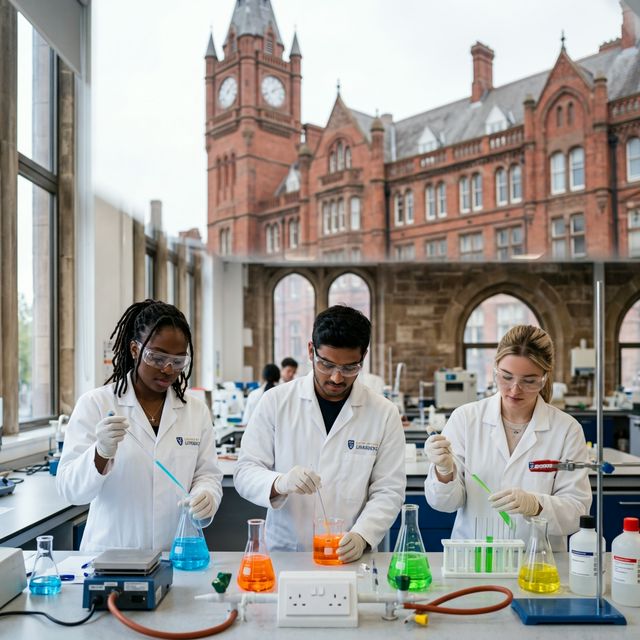
BSc Biological Sciences (with a Foundation Year) leading to
About this course
Biological sciences is the study of life in all its forms, from the molecular machinery of the cell to the ecology of entire ecosystems. It is one of the broadest and most intellectually exciting of the natural sciences, encompassing genetics, physiology, ecology, evolution, microbiology, and the interactions between organisms and their environments. Understanding living systems matters enormously for medicine, agriculture, conservation, biotechnology, and our capacity to address the environmental challenges of the coming decades. At the University of Liverpool, this four-year full-time programme includes a foundation year, making it accessible to students who may not have covered the full range of science A-levels but have the potential and motivation to succeed in a rigorous biological sciences degree. The programme also includes a year abroad, giving you the opportunity to study biology in an international setting and broaden both your academic knowledge and your cultural experience. Liverpool's strong research tradition in the life sciences, including connections with the Liverpool School of Tropical Medicine and a range of biomedical research institutes, enriches the teaching and creates opportunities for students to engage with cutting-edge science. The typical entry tariff of 136 points reflects a programme designed to develop serious scientific capability over four years. You will study the core disciplines of biology from the ground up in the foundation year, moving through genetics, cell biology, ecology, evolution, and physiology as the degree progresses. As you advance you will develop laboratory skills, data analysis, and the ability to read and critically evaluate scientific literature. Biological sciences graduates go on to careers in research, healthcare science, environmental consultancy, conservation, biotechnology, education, and the pharmaceutical industry. Many go on to postgraduate study, including research degrees, medicine, veterinary science, or specialist taught programmes in areas such as ecology, genetics, and microbiology. The foundation year route means the programme is genuinely open to students whose potential outpaces their prior qualifications.
Syllabus & Modules
Typical curriculumStudent Satisfaction
National Student Survey - 145 respondents (62% response rate)
Similarly Ranked Alternatives



What comes next? 🎓
Choosing the right university starts with choosing the right school. Explore transparent, data-driven school profiles powered by official DfE statistics.
Explore Schools on WhatSchool.ai →