BSc Biochemistry
About this course
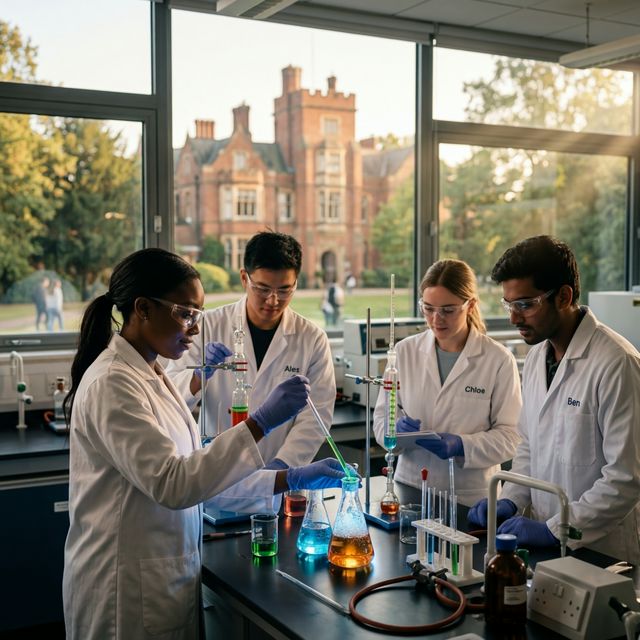
Biochemistry at the University of York sits at the boundary between the physical and life sciences, using the tools and concepts of chemistry to understand the molecular processes that underlie life, health and disease. It is a discipline with profound practical implications: advances in medicine, drug discovery, biotechnology and our understanding of diseases from cancer to infectious illness all depend on biochemical knowledge. This three-year full-time degree incorporates a sandwich year, year abroad and work placement, giving you one of the most practically and internationally enriched biochemistry educations available at any UK university. You will study the structure and function of biological macromolecules, enzyme kinetics, metabolic regulation, molecular biology, cell signalling and the biochemical mechanisms of major disease processes. Laboratory skills are central, and you will develop competence in a wide range of analytical and molecular techniques used in research and industrial settings. The sandwich placement gives you extended professional experience in a pharmaceutical, biotechnology, research or clinical laboratory environment, and the year abroad places your scientific education in an international context. York's biochemistry department has strong research connections to the pharmaceutical and biotechnology industries, and these inform both the teaching and the placement opportunities available to students. A typical entry tariff of around 152 points is expected. Biochemistry graduates from York work in pharmaceutical research and development, clinical trials, biotechnology, quality control, regulatory affairs, diagnostic laboratories and academic research. The combination of rigorous scientific training, laboratory skills and professional placement experience makes them effective in demanding roles from an early stage. Many graduates proceed to postgraduate study including doctoral research in biochemistry, molecular biology, pharmacology or related fields, and some go on to clinical training in medicine or a clinical profession, using the biochemical foundation as a springboard.
Syllabus & Modules
Typical curriculumStudent Satisfaction
National Student Survey - 15 respondents (65% response rate)
Similarly Ranked Alternatives
What comes next? 🎓
Choosing the right university starts with choosing the right school. Explore transparent, data-driven school profiles powered by official DfE statistics.
Explore Schools on WhatSchool.ai →