MSci Biochemistry
About this course
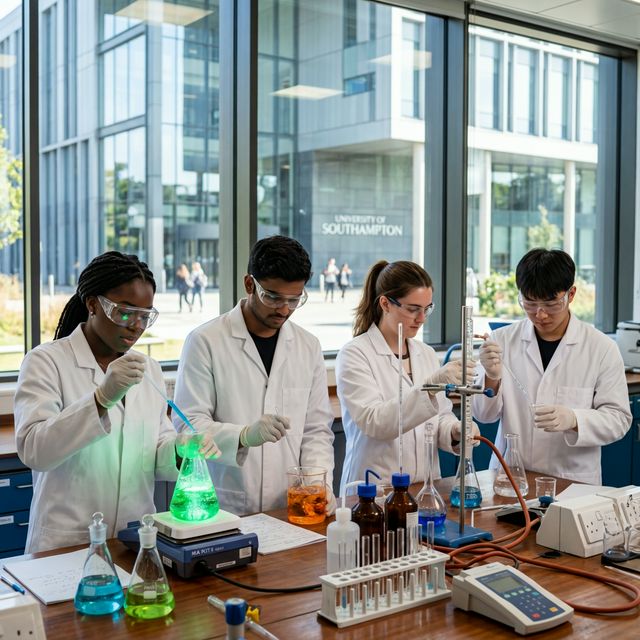
Biochemistry sits at the border between biology and chemistry, examining the molecular processes that underlie all living systems. It asks how DNA encodes the instructions for life, how proteins are built and carry out their functions, how cells generate and use energy, and how the chemical signals that coordinate complex organisms are transmitted and interpreted. These questions matter not only for basic science but for medicine, biotechnology, agriculture, and any field that depends on understanding or manipulating the processes of life. At the University of Southampton, this four-year, full-time MSci programme is an integrated master's degree that takes you from foundational molecular biology and chemistry through to independent research at the frontier of the discipline. You will study DNA, RNA, and protein structure and function, cellular metabolism, enzyme kinetics, genetics, and the molecular basis of disease, developing rigorous laboratory skills alongside your theoretical understanding. The programme includes a sandwich placement year, giving you substantial professional experience in a research or industrial setting before your final year, and work placement is also embedded in the course. This combination of academic depth and practical experience positions you well for roles that demand both scientific expertise and the ability to work in real laboratory and research environments. A typical entry tariff of 136 points reflects the demanding nature of the programme. Graduates from biochemistry programmes go on to careers in clinical biochemistry, pharmaceutical research and development, biotechnology, academic research, science communication, and regulatory affairs. The integrated master's qualification is particularly valued by employers in research and development, and by those seeking to move directly into postgraduate research without a separate MSc. Many graduates go on to doctoral study in biochemistry, molecular biology, structural biology, or related fields, using the MSci as a strong foundation for original scientific research.
Syllabus & Modules
Typical curriculumStudent Satisfaction
National Student Survey - 20 respondents (59% response rate)
Similarly Ranked Alternatives




What comes next? 🎓
Choosing the right university starts with choosing the right school. Explore transparent, data-driven school profiles powered by official DfE statistics.
Explore Schools on WhatSchool.ai →