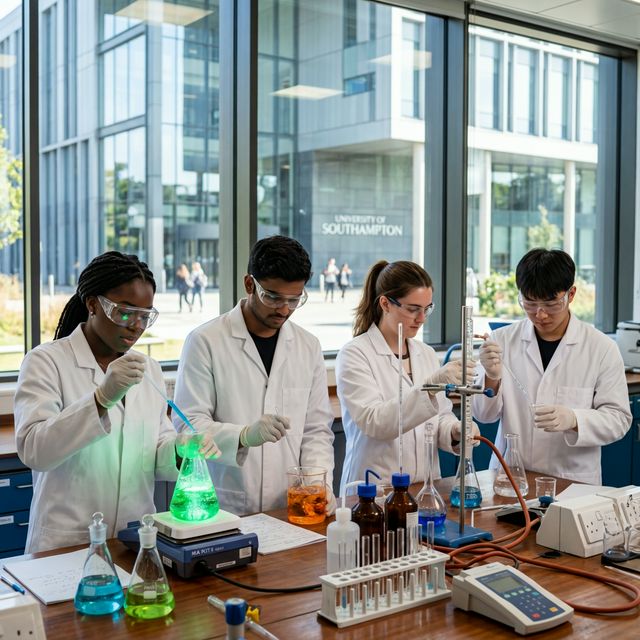
BSc Biochemistry (3 years)
About this course
Biochemistry is the study of the chemical processes that sustain life, examining the molecules, reactions and regulatory mechanisms that underlie everything from the duplication of DNA and the folding of proteins to the signalling cascades that coordinate cell behaviour and the metabolic pathways that provide energy. It is a discipline that operates at the molecular scale but has consequences at every level of biology, from the mechanisms of genetic inheritance through the molecular basis of disease to the development of drugs and therapeutic approaches that intervene in biological processes with precision. At the University of Southampton this three-year, full-time programme takes you from the fundamental principles of molecular biology and biochemistry through to advanced topics in genomics, proteomics, enzymology, cell signalling, metabolism and the molecular mechanisms of diseases including cancer, neurodegeneration and infection. You will develop strong practical laboratory skills alongside your theoretical understanding, learning to design and conduct experiments, analyse data and communicate scientific findings with clarity. The programme includes a sandwich year and a work placement, giving you direct experience in biochemical research or industry before graduation. Southampton's strong research culture in biological and chemical sciences means your teaching is informed by active scientific work. Biochemistry graduates pursue careers in academic and industrial research, the pharmaceutical and biotechnology industries, medical diagnostics, clinical biochemistry, bioinformatics, food science and environmental science. Many continue to postgraduate study, including PhD research in biochemistry, molecular biology, structural biology or pharmacology, and some move into medicine or other health professions with additional training. The analytical, laboratory and problem-solving skills the degree develops are also valued in scientific publishing, patent law, regulatory affairs and the growing field of precision medicine.
Syllabus & Modules
Typical curriculumStudent Satisfaction
National Student Survey - 15 respondents (65% response rate)
Similarly Ranked Alternatives


What comes next? 🎓
Choosing the right university starts with choosing the right school. Explore transparent, data-driven school profiles powered by official DfE statistics.
Explore Schools on WhatSchool.ai →