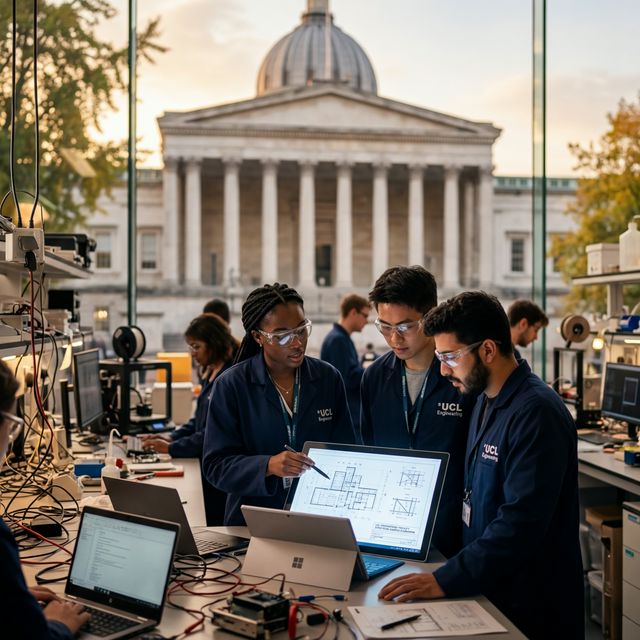
BEng Biochemical Engineering
About this course
Biochemical engineering applies the principles of both biological science and engineering to the design and operation of processes that use living organisms, cells, or their components to produce useful products. It is the discipline behind the manufacture of medicines including vaccines and biopharmaceuticals, the development of sustainable bio-based materials and fuels, the treatment of wastewater using biological processes, and the emerging field of synthetic biology. As the life sciences and engineering converge more closely, biochemical engineers are increasingly central to the industries that address major societal challenges. At University College London, this three-year, full-time degree draws on UCL's world-class research environment in both engineering and the biological sciences. You will study the fundamental biology and biochemistry that underpins living systems, developing an understanding of microbial physiology, cell culture, and the molecular processes that engineers seek to harness. Engineering science runs alongside this: you will engage with fluid mechanics, heat and mass transfer, thermodynamics, and process design, learning how these principles apply when the process in question involves biological rather than purely chemical transformations. Bioreactor design and scale-up, downstream processing, and the regulatory and safety considerations of working with biological materials are central topics. A typical entry tariff of 152 UCAS points reflects the scientific and mathematical rigour the degree demands. The programme develops both analytical breadth and the kind of creative problem-solving that engineering education at its best produces. Working at the intersection of two major disciplines means you will constantly be required to translate between them. Graduates work in the pharmaceutical and biotechnology industries, in food and drink manufacturing, in environmental engineering, and in public health and regulatory bodies. Many pursue postgraduate study or research in bioprocessing, synthetic biology, or chemical engineering. The skill set is in growing demand across a widening range of sectors.
Syllabus & Modules
Typical curriculumStudent Satisfaction
National Student Survey - 15 respondents (67% response rate)
Similarly Ranked Alternatives
What comes next? 🎓
Choosing the right university starts with choosing the right school. Explore transparent, data-driven school profiles powered by official DfE statistics.
Explore Schools on WhatSchool.ai →