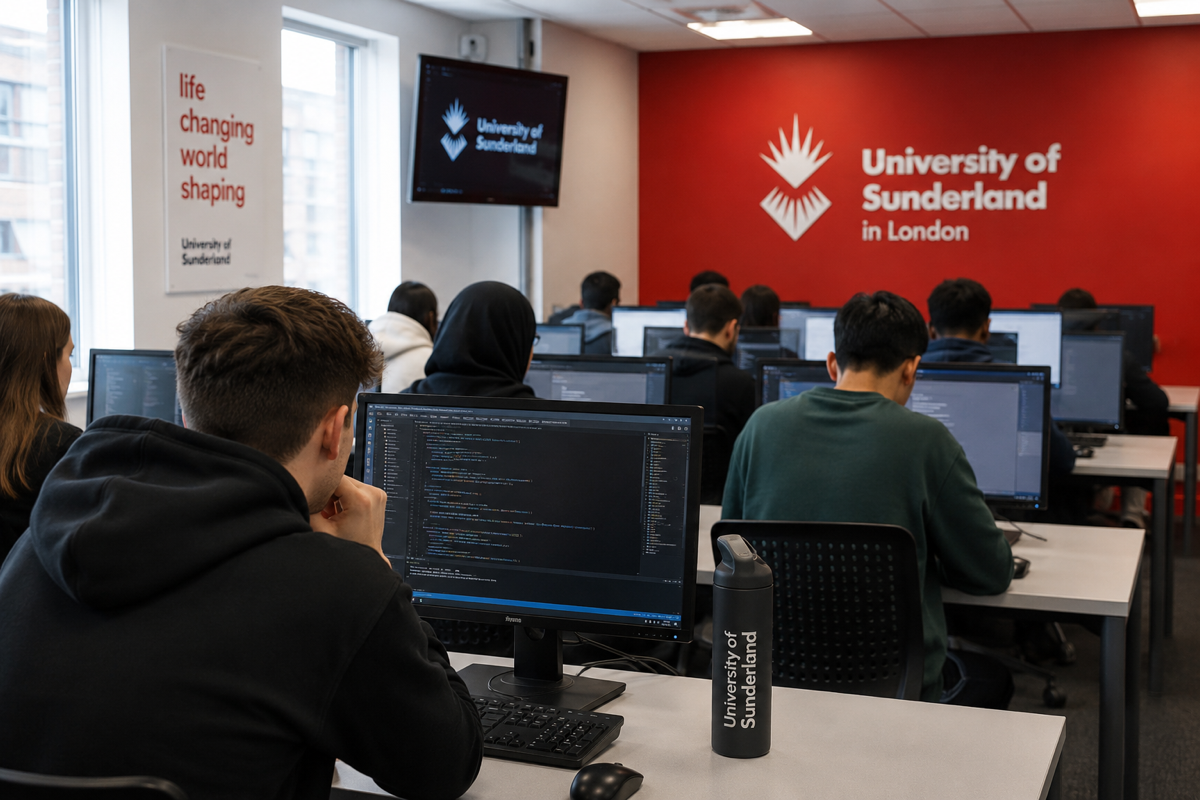
MBChB Bachelor of Medicine / Bachelor of Surgery
About this course
Medicine is the discipline dedicated to the prevention, diagnosis and treatment of disease, and the restoration of health. Becoming a doctor requires mastery of a vast and continually expanding body of scientific and clinical knowledge, the practical skills to examine and treat patients, and the professional and personal qualities to work with people under some of the most challenging circumstances imaginable. Medical education combines biomedical science with clinical learning, developing both the technical competence and the humanity that excellent medicine requires. At the University of Sunderland, this five-year full-time programme delivers an innovative and highly integrated curriculum in state-of-the-art facilities. The integration of basic sciences and clinical learning is a design principle throughout: rather than dividing preclinical and clinical phases sharply, the programme weaves them together so that scientific understanding is developed alongside and in service of clinical application. You will develop the knowledge, skills and professionalism that a new doctor embarking on foundation training requires, and graduate ready to progress your medical career and make a meaningful difference to patients' lives. You will study anatomy, physiology, biochemistry, pharmacology, pathology, microbiology and the clinical sciences alongside communication skills, ethics, professionalism, diagnostic reasoning and the management of patients across a wide range of conditions. Clinical placements in hospitals, general practice and community settings are integral to the curriculum, giving you the supervised patient contact through which clinical competence is developed. On qualifying with a medical degree, you will be eligible to apply for foundation training, the two-year supervised programme through which newly qualified doctors develop clinical skills across different specialties before choosing a postgraduate training pathway. Medicine leads to careers across all clinical specialties, including general practice, surgery, medicine, psychiatry, paediatrics and many others.
Syllabus & Modules
Typical curriculumStudent Satisfaction
National Student Survey - 80 respondents (98% response rate)
Similarly Ranked Alternatives

What comes next? 🎓
Choosing the right university starts with choosing the right school. Explore transparent, data-driven school profiles powered by official DfE statistics.
Explore Schools on WhatSchool.ai →