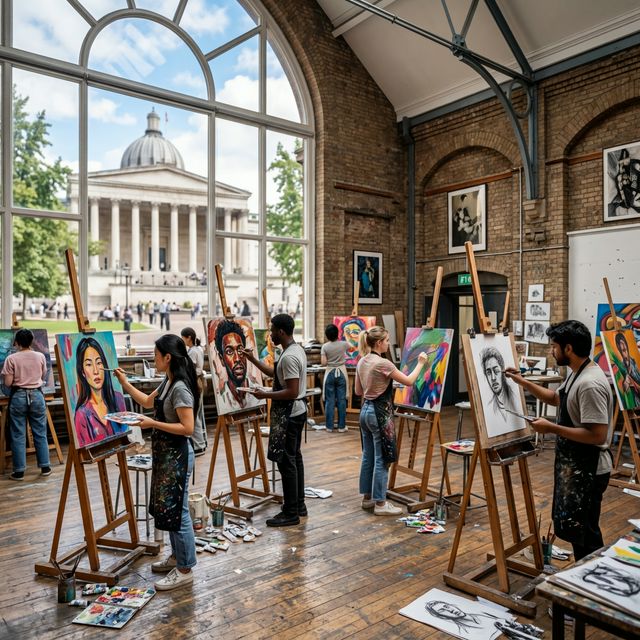
BA Art and Technology
About this course
Art and technology is a discipline that takes seriously the creative and critical possibilities that emerge when artistic practice engages with emerging and disruptive technologies. Where many art programmes focus primarily on traditional or digital media in established forms, art and technology asks what new kinds of work become possible when artists engage with artificial intelligence, biotechnology, robotics, mixed reality, and the digital networks that are reshaping human experience. The field requires both artistic rigour and genuine technical engagement, producing practitioners who can contribute to artistic and cultural conversations about what technology means for human life. At University College London, one of the world's leading research universities, this three-year practice-based, interdisciplinary programme places you at the intersection of art, humanities, and science in an unusually rich intellectual environment. You will develop your artistic practice and critical thinking alongside engagement with the technological systems and scientific concepts that inform your work, and you will learn to situate your practice within the broader contexts of art history, theory, and contemporary cultural debate. UCL's research environment and its connections across science, engineering, and the humanities give the programme access to ideas and collaborators that a purely arts-focused institution could not provide. The typical entry tariff is 216 UCAS points. Graduates of art and technology programmes work as artists, researchers, curators, and creative technologists in galleries, museums, research institutions, technology companies, and the broader creative and cultural sector. The intersection of art and emerging technology is a field that is growing rapidly, and practitioners who can navigate it credibly from both sides are in genuine demand. Many graduates continue to postgraduate study in fine art, science and technology studies, interaction design, or related fields.
Syllabus & Modules
Typical curriculumStudent Satisfaction
National Student Survey - 130 respondents (86% response rate)
What comes next? 🎓
Choosing the right university starts with choosing the right school. Explore transparent, data-driven school profiles powered by official DfE statistics.
Explore Schools on WhatSchool.ai →