High Drop-out Rate Alert
30% of students drop out or transfer from this specific course. Consider asking why on an open day.
BA Art and Design with Creative Technologies
About this course
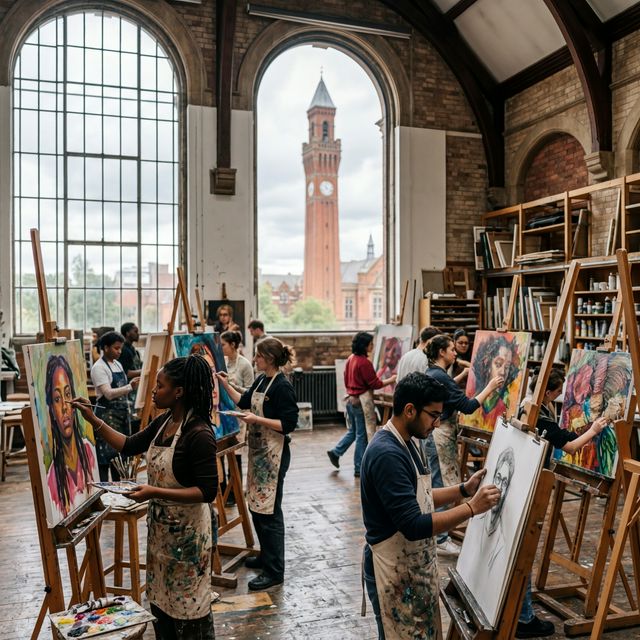
Art and design with creative technologies sits at the productive boundary between traditional studio practice and the digital tools, platforms, and ideas that are reshaping what it means to make and communicate visual work. The field acknowledges that contemporary artists and designers work across analogue and digital processes, and that understanding how technology functions, not just as a tool but as a creative medium with its own logic and aesthetic possibilities, is now central to informed creative practice. This three-year full-time programme at Birmingham City University develops your creative practice across both art and design while integrating study of the creative technologies that shape contemporary work. You will explore how digital fabrication, interactive media, generative processes, and networked environments intersect with traditional craft and design thinking, building a practice that is responsive to the conditions of contemporary creative production. A sandwich year in industry and a work placement are built into the programme, connecting your academic and creative development to professional contexts and giving you experience of how the creative industries actually operate. With a typical entry tariff of 120 points, the programme welcomes students with a creative portfolio and genuine curiosity about how technology and art intersect. Graduates from art and design programmes with a creative technologies focus are well positioned for a broad range of careers in the creative sector. Graphic design, digital media, interactive design, user experience, motion graphics, and game art are all fields that value practitioners who can work across creative and technological competencies. Many graduates move into advertising, branding, film and television production, or the video games industry. The independent sector, including gallery-based practice, installation art, and digital arts commissioning, is also open to graduates with a strong practice. Creative technology skills also transfer well into roles in education, cultural institutions, and community arts. Postgraduate study in fine art, digital arts, or design is available for those who want to develop their practice or research further.
Syllabus & Modules
Typical curriculumStudent Satisfaction
National Student Survey - 20 respondents (95% response rate)
Similarly Ranked Alternatives

What comes next? 🎓
Choosing the right university starts with choosing the right school. Explore transparent, data-driven school profiles powered by official DfE statistics.
Explore Schools on WhatSchool.ai →