
BA Architecture
About this course
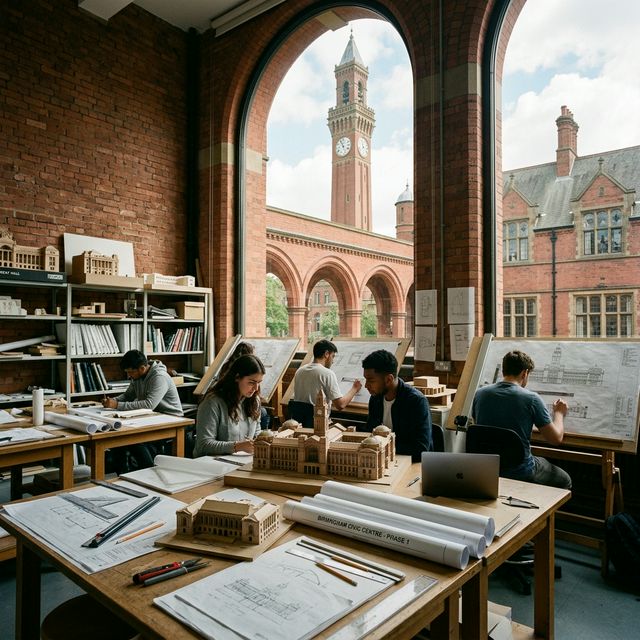
Architecture is the discipline that shapes the built environment, from individual buildings and interiors to urban spaces and landscapes. It brings together creativity, technical knowledge, environmental awareness and an understanding of how people inhabit and experience space. Architects must work across drawing and three-dimensional thinking, structural and environmental principles, planning regulations, materials, history, theory and the social contexts in which buildings are made. It is one of the few disciplines that is both deeply artistic and rigorously technical, demanding both imaginative design thinking and precise analytical skill. At the University of Plymouth, this three-year full-time programme includes a year abroad, giving you exposure to different architectural cultures and urban contexts beyond the UK. The programme develops your architectural presentation and representation skills, supporting design studio work at its core and building your ability to communicate ideas in both two-dimensional and three-dimensional visual form. You will engage with the history and theory of architecture, structural and environmental systems, planning and urban design, and the professional and ethical dimensions of architectural practice. Plymouth's location in the South West, with its distinctive built environment spanning Georgian civic architecture, Victorian industry and contemporary coastal development, gives you a rich local context for your studies. The BA Architecture provides the first stage of architectural education, known as Part 1. Graduates typically go on to further study at master's level (Part 2) and then a period of professional experience (Part 3) to qualify as a registered architect with the Architects Registration Board. Beyond architecture practice itself, graduates with this degree go on to careers in urban design, interior architecture, planning, heritage conservation, architectural visualisation, project management and property development. The design and analytical skills developed transfer well into a range of creative and technical professions.
Syllabus & Modules
Typical curriculumStudent Satisfaction
National Student Survey - 70 respondents (72% response rate)
Similarly Ranked Alternatives


What comes next? 🎓
Choosing the right university starts with choosing the right school. Explore transparent, data-driven school profiles powered by official DfE statistics.
Explore Schools on WhatSchool.ai →