MEng Software Engineering with Industrial Studies and Foundation Year
About this course
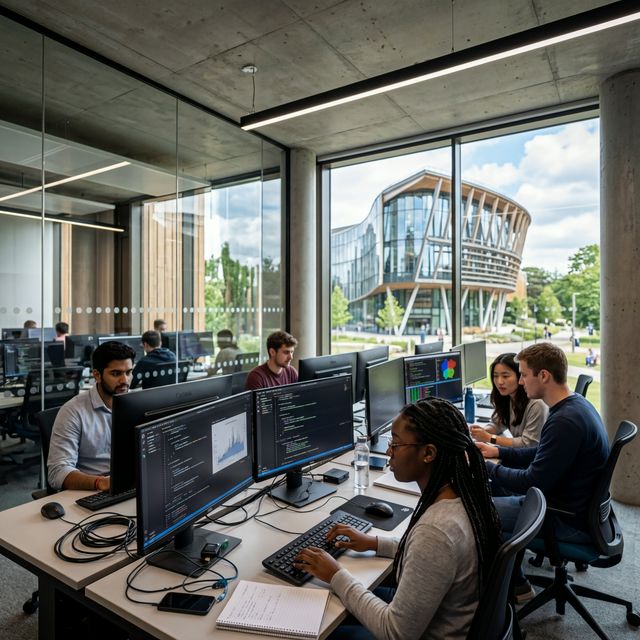
Software engineering with industrial studies combines one of the most in-demand technical disciplines with sustained professional experience in industry, producing graduates who are not only technically capable but commercially aware and ready to contribute from their first day in a professional role. Software engineering provides the systematic frameworks, methods, and practices needed to design, build, test, and maintain software at scale, while the industrial studies component ensures that this learning is grounded in the realities of how software is developed in practice. At the University of Southampton, this six-year full-time degree, which includes a foundation year, takes you from foundational principles through to advanced master's level study. You will learn to analyse organisations' software needs, design appropriate architectures, and build and test systems that are reliable, scalable, and maintainable. The programme develops problem-solving, planning, and teamwork skills that are central to successful software engineering practice, alongside the specialist technical knowledge needed to tackle complex development challenges. The foundation year prepares students who need to build their mathematical and computational foundations before entering the main programme. The typical entry tariff is 152 UCAS points. Graduates of software engineering master's programmes from a research-intensive university like Southampton are sought after across virtually every sector of the economy. Software developers, systems architects, technical leads, project managers, quality assurance engineers, and consultants in technology-focused roles are all natural destinations. The industrial studies element means graduates already have real professional experience to draw on, which significantly strengthens their transition into the workplace. Many graduates also pursue further specialist study or research, particularly in areas such as artificial intelligence, cybersecurity, or distributed systems.
Syllabus & Modules
Typical curriculumStudent Satisfaction
National Student Survey - 25 respondents (78% response rate)
Similarly Ranked Alternatives


What comes next? 🎓
Choosing the right university starts with choosing the right school. Explore transparent, data-driven school profiles powered by official DfE statistics.
Explore Schools on WhatSchool.ai →