BSc Psychology
About this course
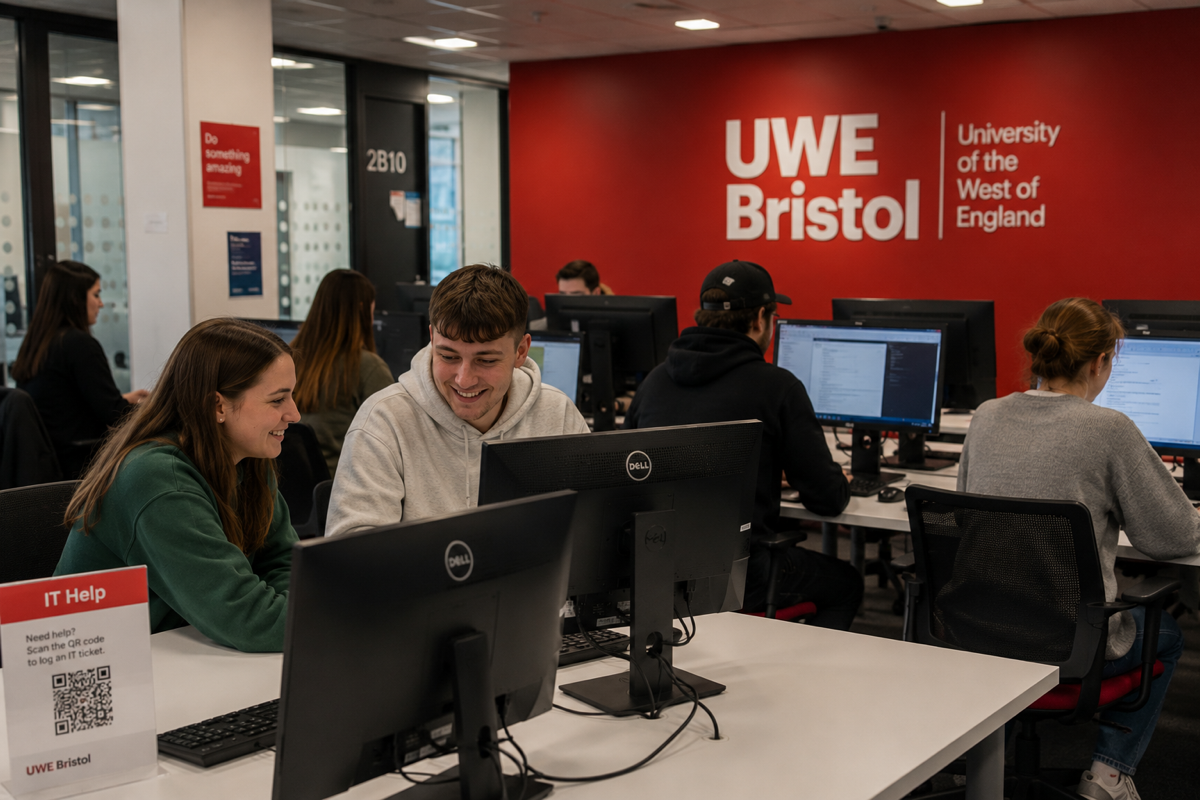
Psychology is the scientific study of mind and behaviour, concerned with understanding how people think, feel, perceive, learn, and act, both as individuals and within social groups. It draws on biology, neuroscience, philosophy, and social science to investigate everything from the mechanisms of memory and attention to the social dynamics of prejudice and conformity. A psychology degree develops not only your understanding of human behaviour but also your capacity for rigorous scientific thinking, quantitative analysis, and evidence-based reasoning, skills that are valued well beyond the field of psychology itself. At the University of the West of England, Bristol, this three-year, full-time degree is accredited by the British Psychological Society and has a strong practical focus designed to build the professional skills that employers notice. You will study the core areas of the discipline, including cognitive, social, developmental, biological, and abnormal psychology, while developing your abilities in research design, statistical analysis, and scientific writing. A foundation year is available for students who benefit from additional preparation before the degree proper, and a sandwich year provides the opportunity to undertake a substantial work placement in a psychological, health, or research setting. Work placements are embedded throughout the programme, giving you professional experience alongside your academic study. A typical entry tariff of 136 points reflects the programme's accessible entry point for motivated students. BPS accreditation means this degree provides the Graduate Basis for Chartered Membership, which is the prerequisite for postgraduate training in applied psychology, including clinical, forensic, educational, occupational, and health psychology. Many graduates pursue this route into professional practice, while others move directly into careers in HR, market research, counselling, social care, education, public health, and the third sector. The analytical and interpersonal skills developed throughout the programme are among the most transferable in higher education.
Syllabus & Modules
Typical curriculumStudent Satisfaction
National Student Survey - 115 respondents (72% response rate)
Similarly Ranked Alternatives


What comes next? 🎓
Choosing the right university starts with choosing the right school. Explore transparent, data-driven school profiles powered by official DfE statistics.
Explore Schools on WhatSchool.ai →