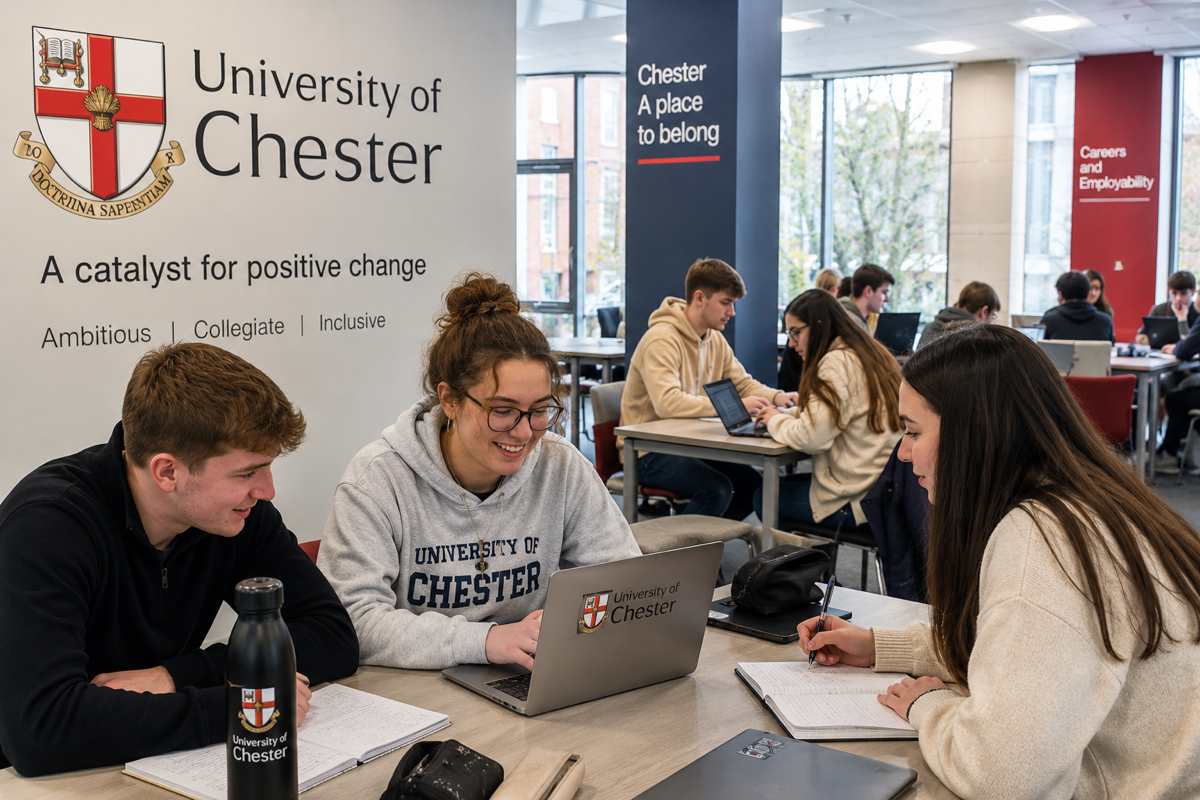
BSc Psychology and Sociology
About this course
Psychology and sociology approach human behaviour and social life from complementary angles. Psychology focuses on the individual, investigating how people think, feel, remember, and relate, and examining the biological and cognitive processes that underlie mental life and behaviour. Sociology focuses on the collective, asking how social structures, institutions, and cultural norms shape people's lives and opportunities, and why inequalities persist across generations and communities. Studying them together gives you a richer understanding of human experience than either discipline can provide alone. At the University of Chester, this three-year, full-time programme develops your understanding of both disciplines in depth, giving you the tools to analyse both individual behaviour and the social forces that context and constrain it. You will engage with psychological research methods, cognitive and developmental psychology, and social and clinical perspectives alongside sociological theory, the study of inequalities, institutions, and social change, and the research methods that sociologists use to study social life. A year abroad option is available, allowing you to study in another country and to encounter different social and cultural contexts, enriching your comparative perspective on the questions both disciplines address. The combination develops strong research skills, critical thinking, and the ability to analyse human experience at multiple levels simultaneously, all of which are valued across a range of careers. Graduates go on to work in mental health, social care, counselling, education, community development, policy research, HR, and the charity sector. Many pursue further professional training in psychology, social work, or counselling, while others move directly into careers in healthcare, public administration, or research. Postgraduate study in psychology, sociology, social policy, or related fields is another natural route.
Syllabus & Modules
Typical curriculumStudent Satisfaction
National Student Survey - 100 respondents (72% response rate)
Similarly Ranked Alternatives

What comes next? 🎓
Choosing the right university starts with choosing the right school. Explore transparent, data-driven school profiles powered by official DfE statistics.
Explore Schools on WhatSchool.ai →