MA Portuguese/Economic and Social History
About this course
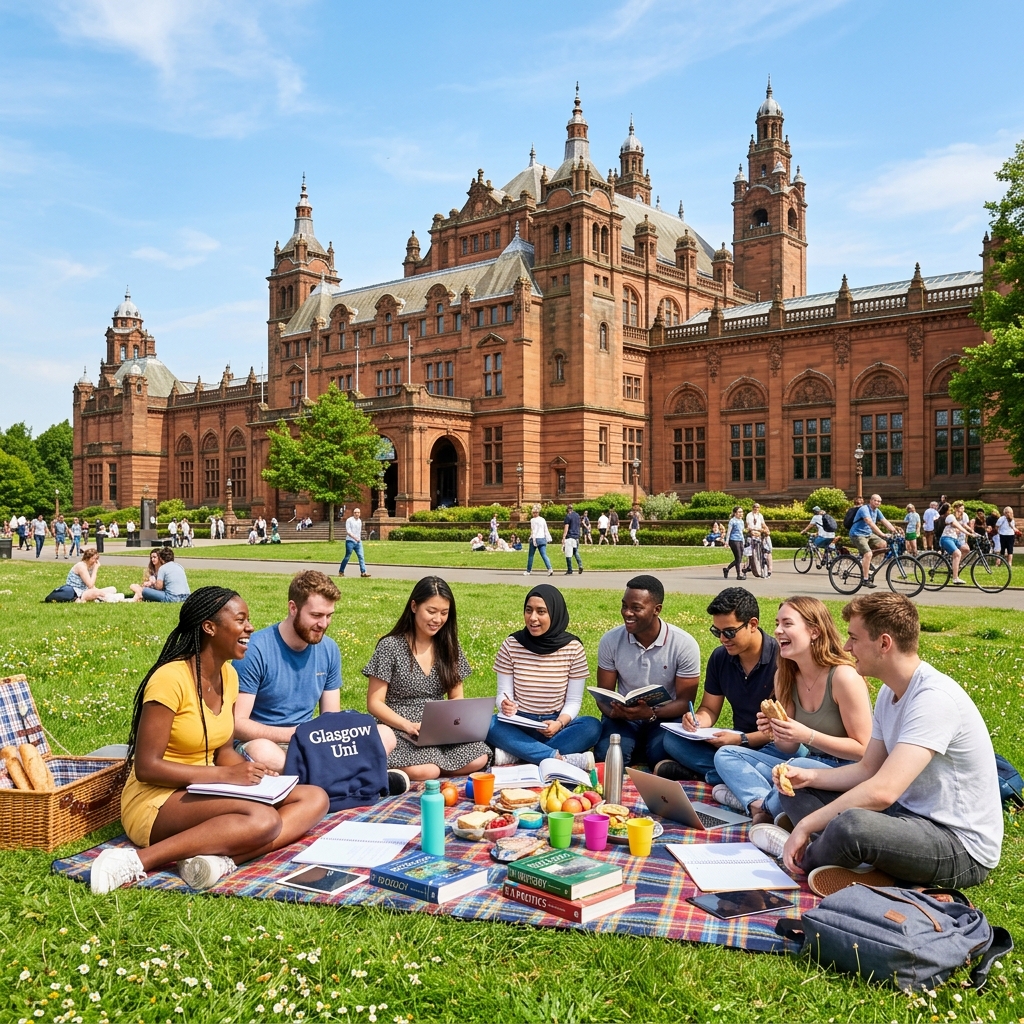
Portuguese and Economic and Social History is a pairing that opens unusual and valuable perspectives on the world. Portuguese is one of the world's most widely spoken languages, the language of Brazil, Portugal, Angola, Mozambique, and several other nations, giving it a reach that extends across four continents. Economic and social history, meanwhile, focuses on the material and structural dimensions of the past: how people lived, how they worked, how resources were produced and distributed, and how these processes shaped the societies we inhabit today. At the University of Glasgow, this five-year full-time programme combines rigorous language acquisition with substantive historical study. On the language side, you will develop your reading, writing, speaking, and listening skills in Portuguese, engaging with literary and cultural texts as well as contemporary material. The economic and social history strand takes you through questions of industrialisation, migration, labour, poverty, gender, and the long-run development of global economies. The programme uniquely combines the study of history and the social sciences, asking how social and economic structures have evolved and what traces they leave in the present. A sandwich placement year gives you professional experience alongside your studies, strengthening your employability and giving you context for the analytical work you do in the classroom. Graduates with this combination of skills are well placed for careers in international business, trade, diplomacy, journalism, government, development organisations, and international consultancy. The Portuguese-speaking world represents an enormous and growing economic sphere, and professionals who can operate in the language and understand its historical and social context are sought after. Many graduates also pursue postgraduate study in history, development studies, Latin American studies, international relations, or linguistics.
Syllabus & Modules
Typical curriculumStudent Satisfaction
National Student Survey - 70 respondents (79% response rate)
Similarly Ranked Alternatives


What comes next? 🎓
Choosing the right university starts with choosing the right school. Explore transparent, data-driven school profiles powered by official DfE statistics.
Explore Schools on WhatSchool.ai →