High Drop-out Rate Alert
20% of students drop out or transfer from this specific course. Consider asking why on an open day.
BSc Physics with a Foundation Year
About this course
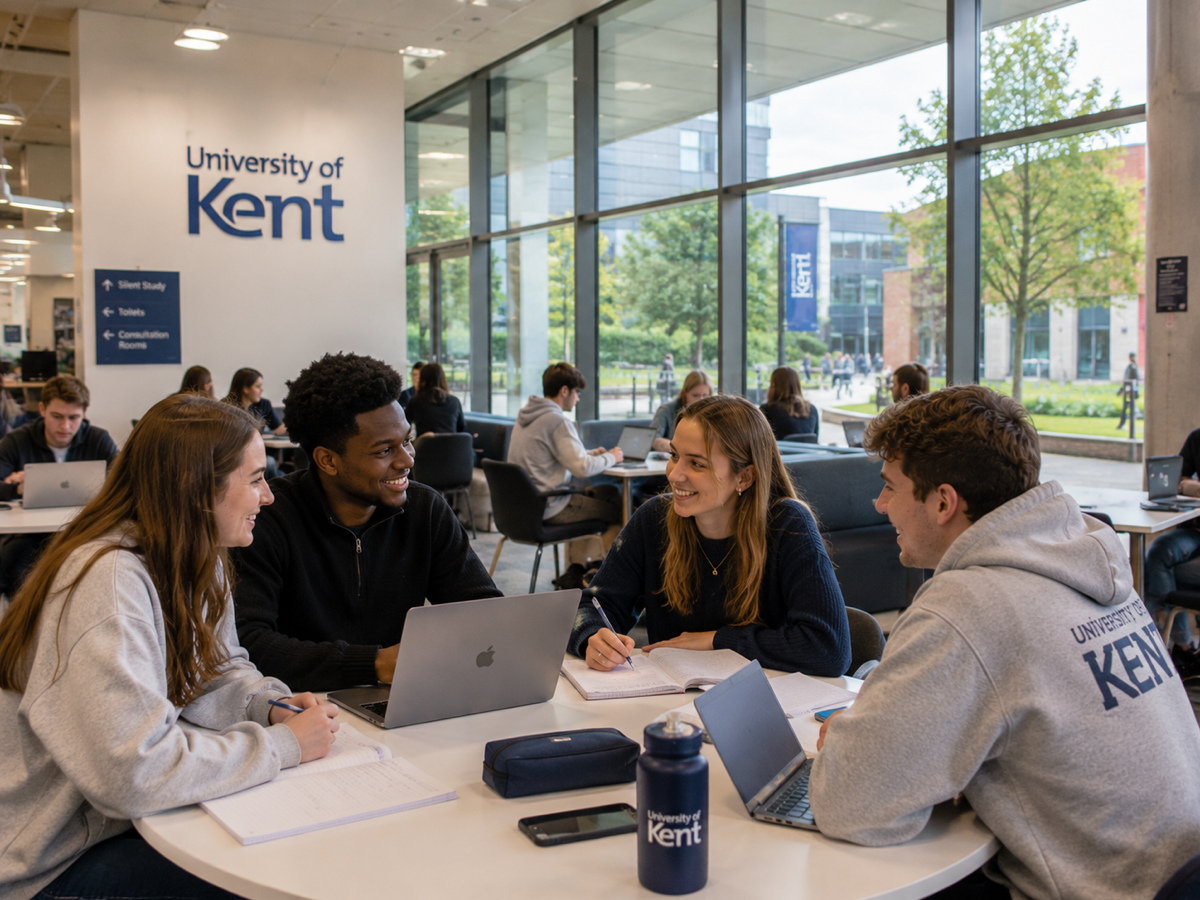
Physics is the science that seeks to understand the fundamental laws governing the universe, from the behaviour of subatomic particles to the large-scale structure of space itself. It encompasses quantum mechanics, electromagnetism, thermodynamics, classical mechanics, and relativity, and it provides the conceptual and mathematical foundations that underpin most of modern technology. The discipline develops problem-solving and quantitative reasoning skills of the highest order, and these skills are valued far beyond physics itself in engineering, computing, finance, and data science. At the University of Kent, the foundation year in physics has been specifically designed to provide the knowledge and skills needed for entry to degree-level physics, astrophysics, astronomy, or space science studies. It builds the mathematical and physical foundations that the main degree requires, supporting students who bring strong potential but who benefit from a more gradual introduction to the demands of the subject. The full programme runs over four years full-time, and the main three-year degree that follows covers the full range of physics topics from classical mechanics and electromagnetism through to quantum physics and modern theoretical and experimental methods. Graduates of physics programmes go on to careers in engineering, data science, finance, computing, and the energy sector, as well as in research, science communication, and education. The analytical rigour and quantitative competency that physics training produces are valued across virtually every analytically demanding profession. Many graduates pursue postgraduate research in physics, astrophysics, or related disciplines, or work towards professional engineering qualifications where the physics foundation is directly applicable.
Syllabus & Modules
Typical curriculumStudent Satisfaction
National Student Survey - 20 respondents (52% response rate)
Similarly Ranked Alternatives



What comes next? 🎓
Choosing the right university starts with choosing the right school. Explore transparent, data-driven school profiles powered by official DfE statistics.
Explore Schools on WhatSchool.ai →