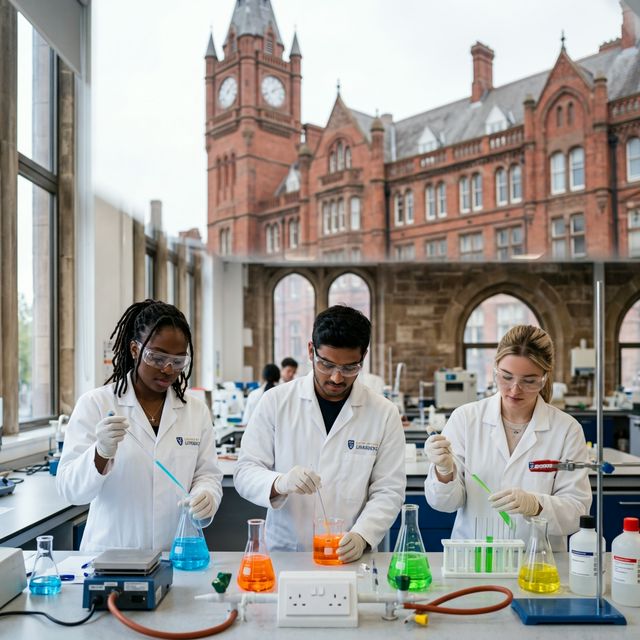
BSc Ocean Sciences
About this course
Ocean sciences addresses one of the most dynamic and consequential environments on the planet. The oceans cover more than seventy per cent of the Earth's surface, drive global climate systems, harbour the majority of Earth's biodiversity, and provide food and livelihoods for hundreds of millions of people. Ocean scientists study the physical, chemical, biological and geological processes that shape the marine environment, from the circulation of ocean currents and the chemistry of seawater to the ecology of coral reefs, deep sea ecosystems and the role of the oceans in the global carbon cycle. As climate change alters ocean temperatures, chemistry and circulation, the urgency of understanding and protecting marine systems has never been greater. The University of Liverpool offers this three-year full-time programme with a particularly well-rounded structure, including a sandwich year with embedded work placement opportunities and a year abroad. Liverpool's connections to major oceanographic research institutions and its proximity to the Irish Sea and broader North Atlantic context give the programme a distinctive marine science environment. The typical entry tariff is around 136 UCAS points. You will study physical oceanography, marine chemistry, marine biology, geological oceanography and climate science, developing a broad understanding of how oceanic systems work before specialising in areas of particular interest. Field work, ship-based sampling, data analysis and laboratory skills are central to the programme, alongside mathematical and computational modelling of ocean processes. The placement and year abroad experiences add significant professional depth, often involving work or study at research institutions with major ocean science programmes. Graduates of ocean sciences programmes work in marine research institutions, environmental consultancies, the offshore energy sector, fisheries management, government agencies including the Environment Agency and the Met Office, and international organisations concerned with ocean governance. Roles in climate modelling, environmental impact assessment, marine conservation, ocean monitoring and maritime industries are all well-trodden paths. Postgraduate study in oceanography, marine biology, climate science or environmental management is a natural next step for those who wish to develop a research or specialist practice.
Syllabus & Modules
Typical curriculumStudent Satisfaction
National Student Survey - 35 respondents (68% response rate)
Similarly Ranked Alternatives



What comes next? 🎓
Choosing the right university starts with choosing the right school. Explore transparent, data-driven school profiles powered by official DfE statistics.
Explore Schools on WhatSchool.ai →