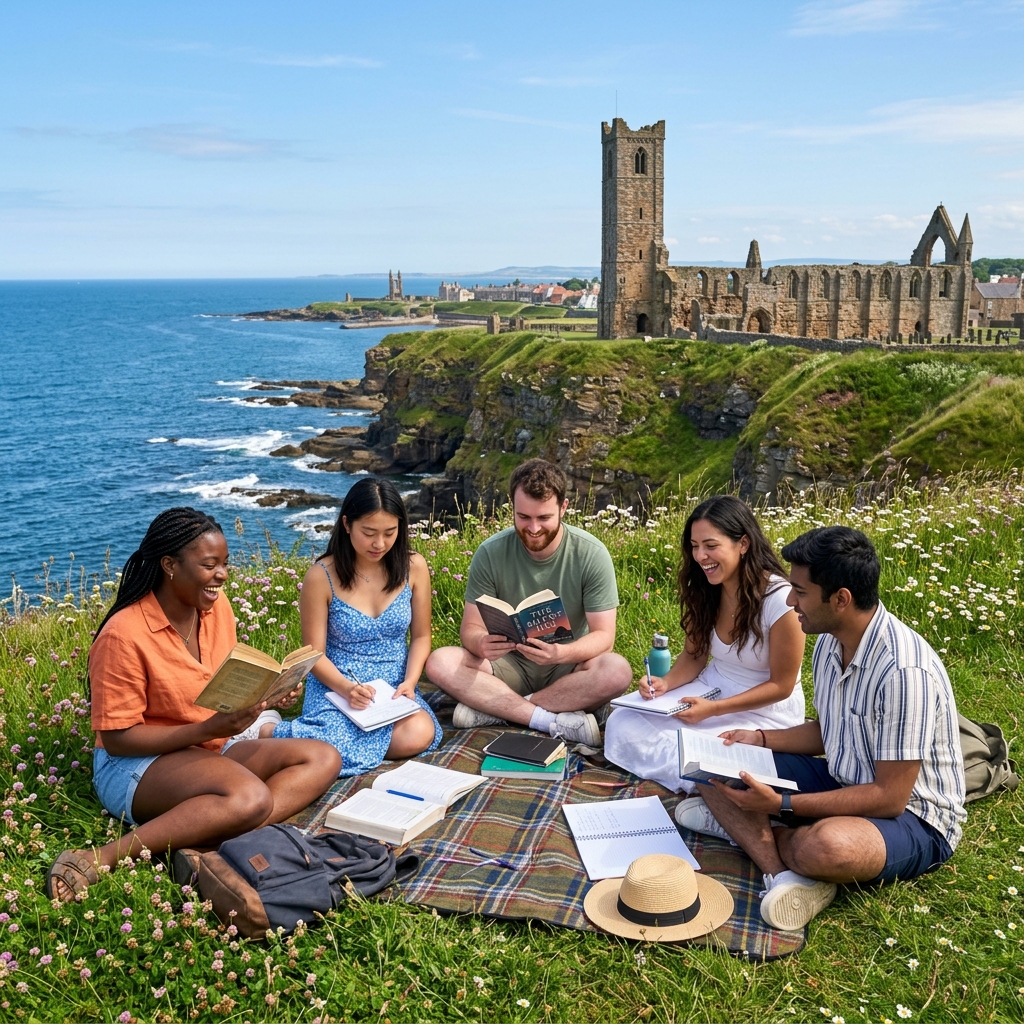
MA Modern Languages (French and Italian) and Greek
About this course
French, Italian, and Greek is a triple combination that places three of the great Mediterranean cultural traditions in dialogue with each other. French connects you to one of the most globally significant languages and to a literary, philosophical, and cultural tradition that has shaped European thought for centuries. Italian opens the language of Dante, opera, Renaissance art, and one of Europe's most dynamic contemporary cultures. Greek, whether ancient or modern, connects to the birthplace of Western philosophy, democracy, and much of Western literary and aesthetic tradition. Studying all three together gives you an extraordinarily rich comparative perspective on European cultural history. At the University of St Andrews, this four-year programme includes a year abroad, which in a combination of three languages is particularly important for developing the immersive experience that accelerates fluency. You will develop French and Italian to a high level as your primary languages while engaging with Greek, building proficiency across all three alongside the literary, cultural, and historical knowledge that gives each language depth and context. St Andrews' language departments have strong research profiles, and the programme's small-group teaching creates an intensive learning environment. Graduates with this combination are well placed for careers in translation and interpreting, European institutions, diplomacy, cultural organisations, academia, publishing, journalism, and any professional role that benefits from range across European languages and cultures. The combination of French and Italian is valued in the EU institutions, in international business with southern European partners, and in cultural diplomacy. Greek expertise opens specific routes in classical scholarship, Byzantine studies, and contemporary Hellenic affairs. Further study in French, Italian, classical and modern Greek, comparative literature, or European cultural studies is a natural continuation for those who wish to pursue research or specialist professional careers.
Syllabus & Modules
Typical curriculumStudent Satisfaction
National Student Survey - 30 respondents (70% response rate)
Similarly Ranked Alternatives

What comes next? 🎓
Choosing the right university starts with choosing the right school. Explore transparent, data-driven school profiles powered by official DfE statistics.
Explore Schools on WhatSchool.ai →