High Drop-out Rate Alert
45% of students drop out or transfer from this specific course. Consider asking why on an open day.
BA Linguistics and Language (French, German, Italian, Japanese, Spanish)
About this course
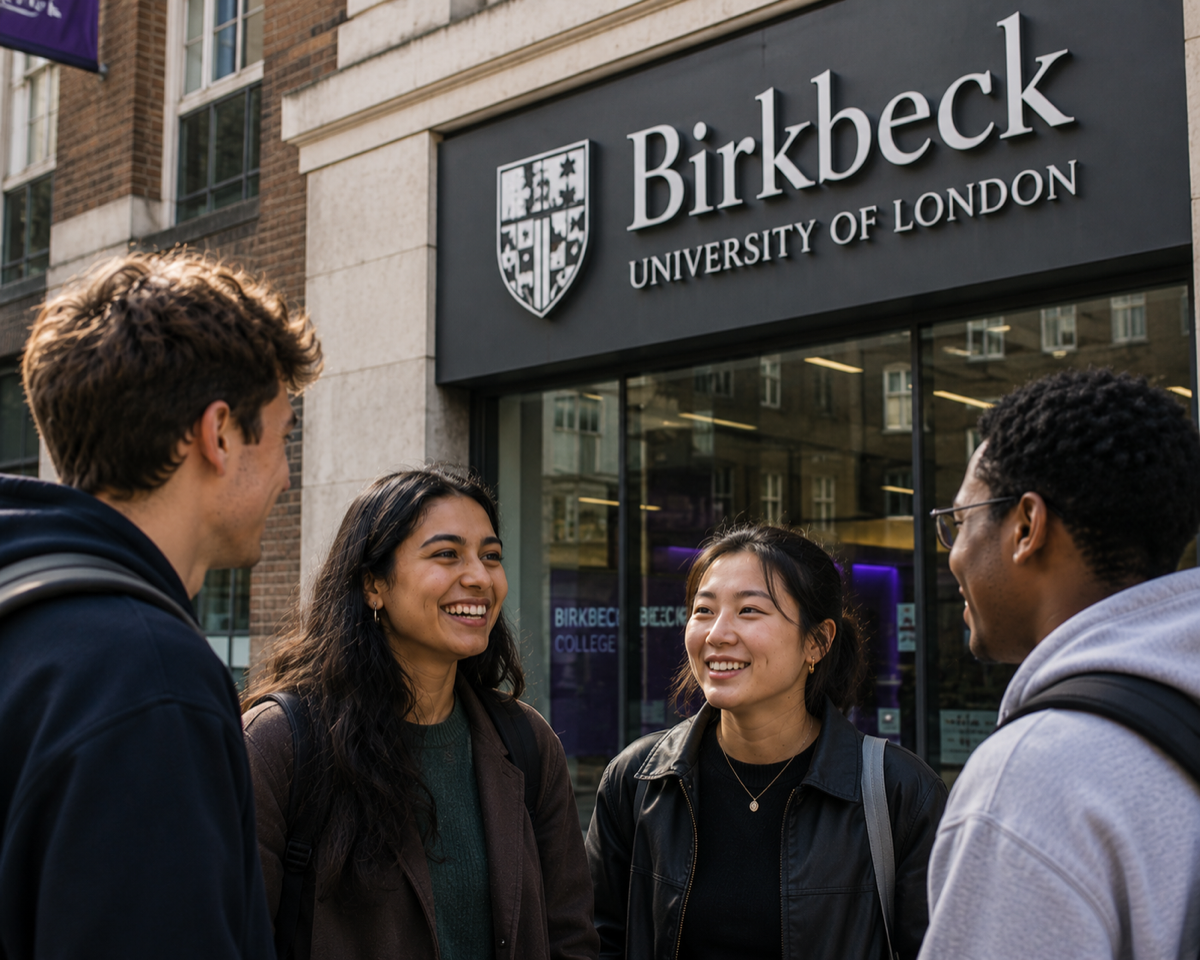
Linguistics is the scientific study of language, examining how it is structured, how it is acquired, how it varies across communities and time, and how it conveys meaning. It asks questions that seem simple on the surface but turn out to be extraordinarily deep: how do children learn to speak, why do languages change, what is the relationship between language and thought, and how do speakers communicate so much that is never explicitly said? Combining linguistics with the practical study of a modern language brings these theoretical questions to life, and gives you a high level of proficiency in a second language alongside the analytical tools to understand what you are learning and why. At Birkbeck College in London, this three-year, full-time programme allows you to study linguistics alongside one of French, German, Italian, Japanese, or Spanish. You will develop advanced competence in your chosen language through intensive practical training, while also building a sophisticated understanding of phonology, syntax, semantics, pragmatics, sociolinguistics, and language acquisition. The linguistics training sheds light on the structure and patterns of your chosen language and on the broader principles that underlie all human languages. Birkbeck's London setting means you study in one of the world's most multilingual cities, an environment that brings the subject matter of your degree to life and connects you to a wide range of professional communities that depend on language expertise. A typical entry tariff of 88 points makes the programme accessible to a wide range of students. Graduates from linguistics and language programmes go on to careers in translation and interpreting, language teaching, speech and language therapy, publishing, journalism, international business, diplomatic services, educational publishing, and language technology. The combination of practical proficiency and theoretical grounding is increasingly valued in careers involving natural language processing, AI development, and computational linguistics. Postgraduate study in linguistics, applied linguistics, language teaching, or a related area is a common next step for those who wish to specialise further.
Syllabus & Modules
Typical curriculumStudent Satisfaction
National Student Survey - 30 respondents (90% response rate)
Similarly Ranked Alternatives


What comes next? 🎓
Choosing the right university starts with choosing the right school. Explore transparent, data-driven school profiles powered by official DfE statistics.
Explore Schools on WhatSchool.ai →