MA Italian and Persian and Russian
About this course
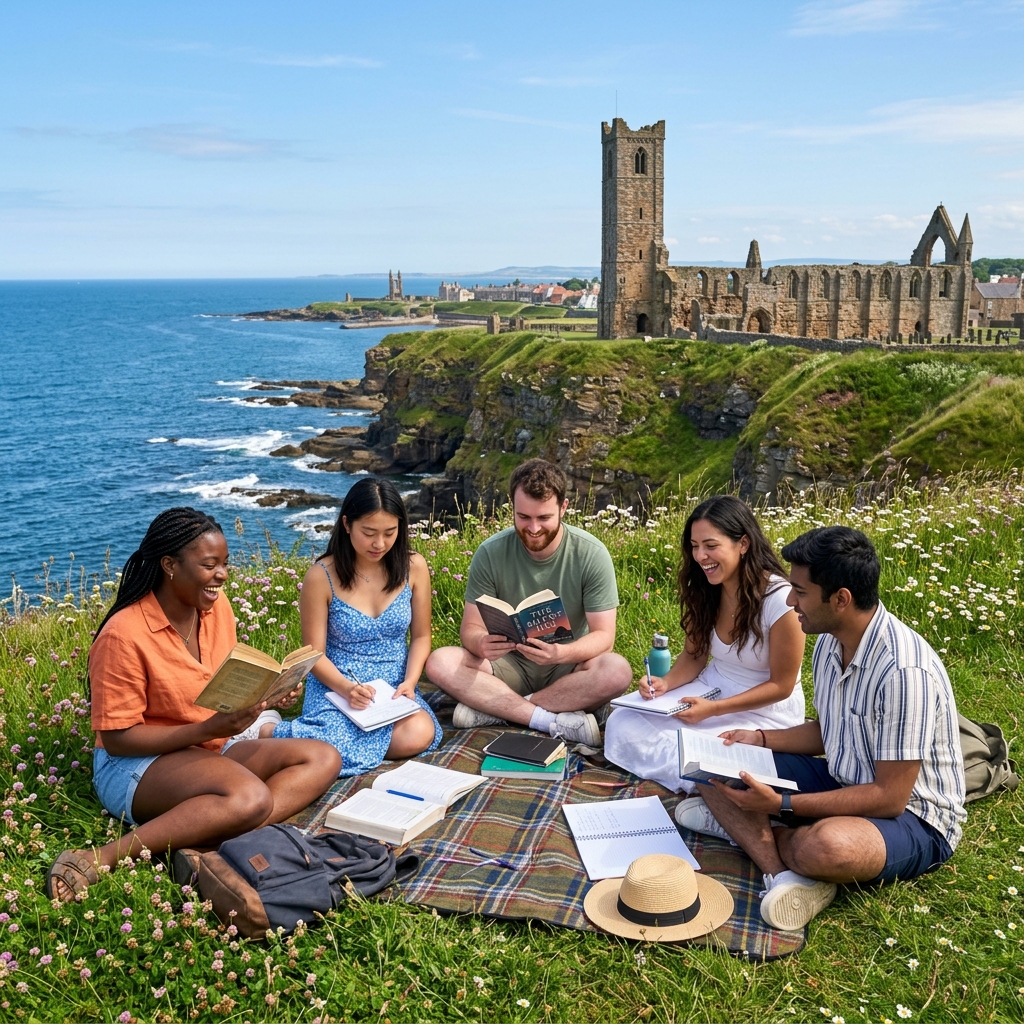
Studying three languages to degree level is among the most ambitious undertakings available in the arts. Italian, Persian, and Russian are three linguistically unrelated languages, each carrying a literary and cultural tradition of immense depth and global significance. Italian is one of the great vehicles of European art, music, literature, and thought, with a continuous tradition from Dante through the Renaissance and beyond. Persian is one of the oldest literary languages in the world, with a classical poetic tradition of extraordinary richness and an ongoing importance as the language of Iran, Afghanistan, and Tajikistan. Russian carries the literary heritage of Tolstoy, Dostoevsky, and Chekhov alongside its role as the primary language of one of the world's most significant geopolitical actors. Together, they open access to three of the most important civilisational traditions outside the anglophone world. At the University of St Andrews, this four-year full-time programme develops your proficiency in all three languages to a high level, alongside specialist engagement with the literatures, cultures, histories, politics, and film traditions associated with each. You will develop the ability to read and discuss complex texts in each language and to move between three very different cultural frameworks with genuine facility. The programme includes a year abroad, which is essential in a degree of this linguistic ambition, giving you sustained immersion in one or more of the language environments. The typical entry tariff of 184 points reflects the academic demands of the programme. Graduates are exceptionally rare, given the combination, and this scarcity is itself a professional asset. Career paths include diplomacy, translation and interpreting, journalism, international business, security and intelligence analysis, academia, and cultural organisations. The combination of Persian and Russian in particular is valued in roles concerned with Central Asia and the Middle East, where these language traditions intersect geographically and historically.
Syllabus & Modules
Typical curriculumStudent Satisfaction
National Student Survey - 15 respondents (62% response rate)
Similarly Ranked Alternatives

What comes next? 🎓
Choosing the right university starts with choosing the right school. Explore transparent, data-driven school profiles powered by official DfE statistics.
Explore Schools on WhatSchool.ai →