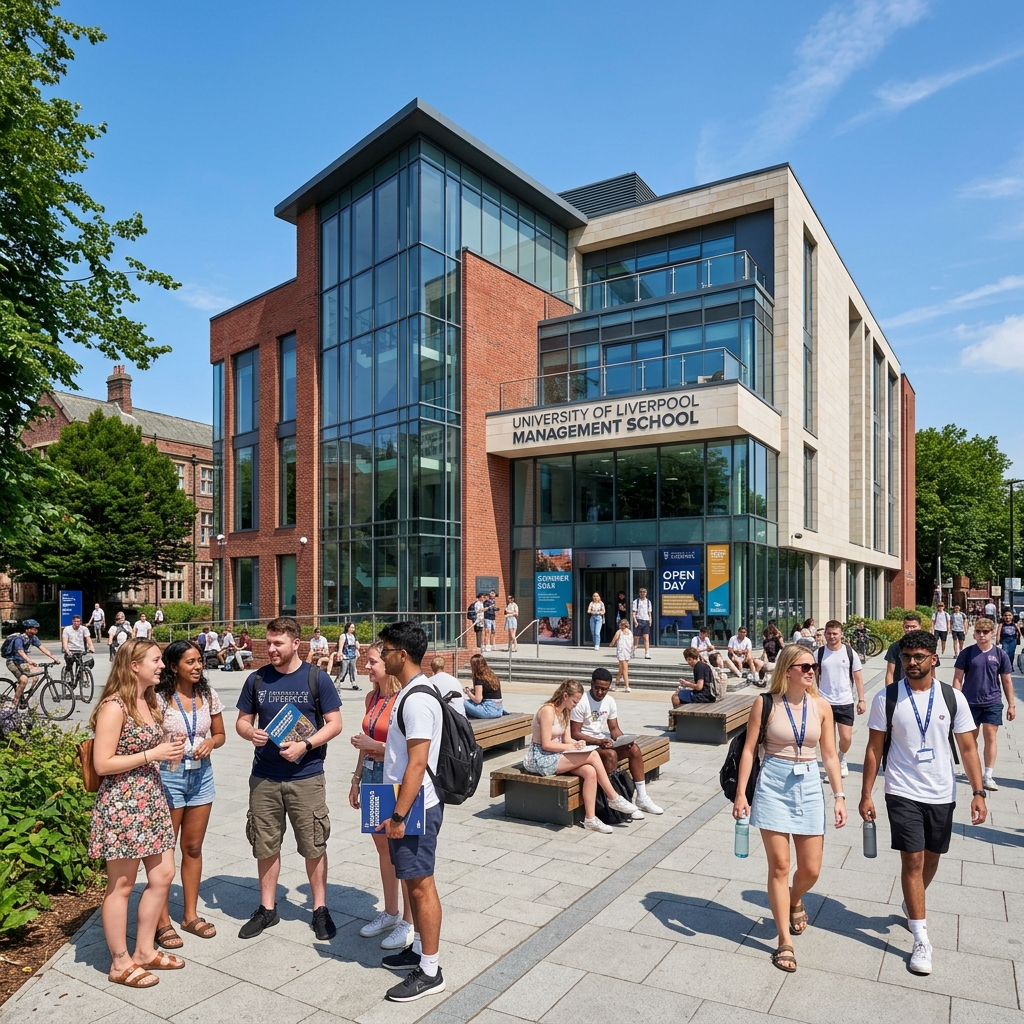
BA International Management with a Year in Industry
About this course
International management is concerned with the challenges and opportunities that arise when business activity crosses national boundaries. Managing an organisation that operates in multiple countries means navigating different legal systems, currencies, cultural norms, competitive environments, and regulatory frameworks, and it requires both the analytical tools of management education and the cultural intelligence to understand how context shapes the way organisations and people behave. As supply chains, markets, and workforces become ever more globally integrated, the demand for managers who can think and operate internationally continues to grow. At the University of Liverpool, this four-year full-time programme includes a year in industry, which is a defining feature of the degree. Rather than a brief work placement, a year in industry gives you an extended period of professional employment, typically in an organisation with an international dimension, where you take on real responsibilities and develop the skills and professional networks that are hard to replicate in a purely academic setting. Liverpool's business school has good connections with the business community both regionally and internationally, supporting the placement process and helping students find roles that genuinely align with the degree's international management focus. Across the programme you will study core management disciplines including strategy, organisational behaviour, marketing, finance, and operations, alongside subjects specific to the international context, such as cross-cultural management, global supply chain management, international trade and investment, and comparative business systems. The year in industry sits within the four-year structure, giving you the opportunity to apply this knowledge in a real organisational context before completing your final year. Graduates of international management programmes move into graduate roles in multinational corporations, consulting firms, international financial institutions, NGOs, export-focused businesses, and government departments with an international brief. The combination of academic foundations and extended professional experience tends to produce candidates who are attractive to employers.
Syllabus & Modules
Typical curriculumStudent Satisfaction
National Student Survey - 260 respondents (62% response rate)
Similarly Ranked Alternatives



What comes next? 🎓
Choosing the right university starts with choosing the right school. Explore transparent, data-driven school profiles powered by official DfE statistics.
Explore Schools on WhatSchool.ai →