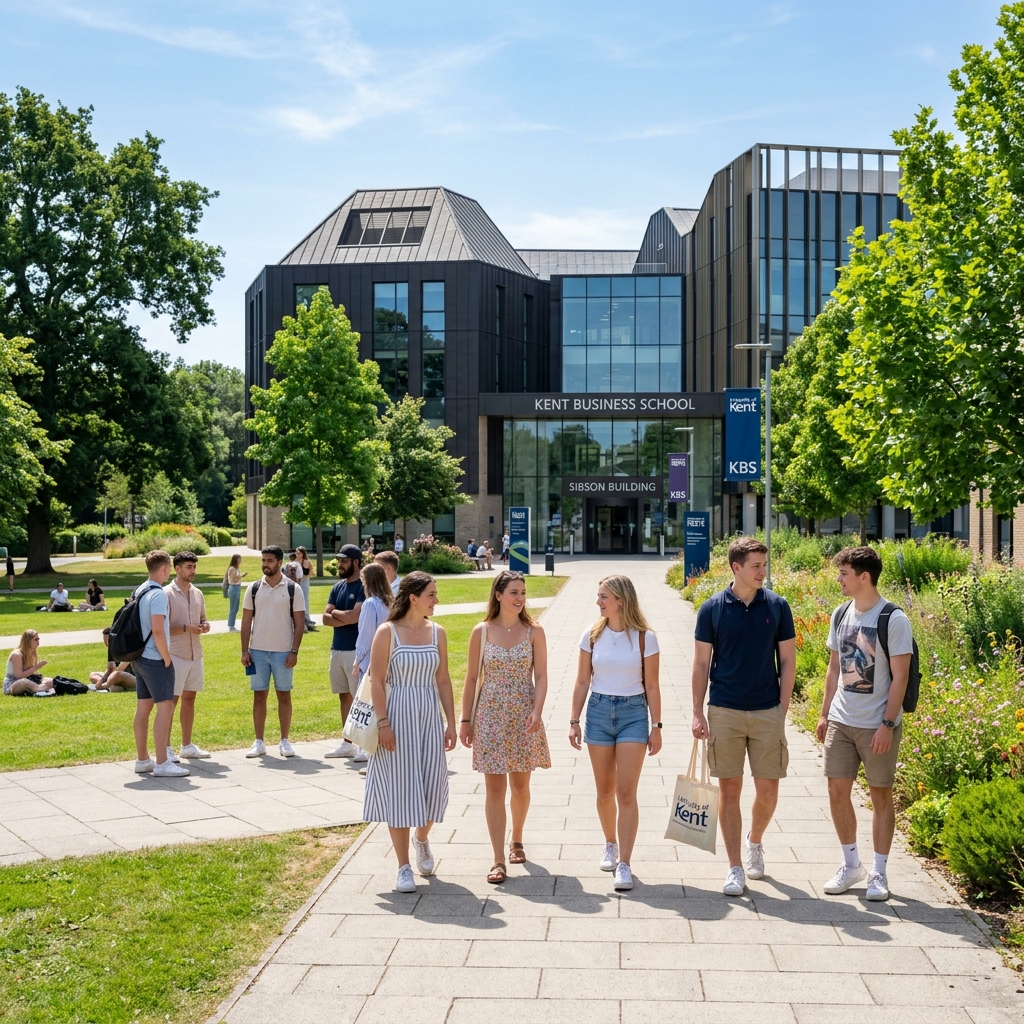
BSc International Business with a Foundation Year
About this course
International business is a discipline that examines how organisations operate across national borders, navigating the commercial, legal, cultural, and regulatory differences that shape the global economy. It draws on economics, management, finance, and the social sciences to explain why firms expand internationally, how global supply chains are structured, and what it takes to succeed in markets that differ fundamentally from one another in their institutions and norms. For students drawn to the global dimension of enterprise, it offers a rigorous and practically grounded education. The International Business with Foundation Year programme at the University of Kent is designed for students who are excited by the global nature of business and motivated by the cultural context of enterprise. The foundation year provides the academic preparation you need before entering the main degree, building skills in analysis, communication, and quantitative reasoning that will support your studies throughout the programme. The part-time mode means the degree can be studied alongside other commitments, making it accessible to a broader range of students. You will study the theory of international trade and foreign direct investment alongside the practical dimensions of managing organisations across cultures, from marketing and strategy to finance and supply chain management. You will develop an understanding of international institutions, trade agreements, and the regulatory environments that businesses must navigate, as well as the cross-cultural communication skills that are essential for working effectively with colleagues, clients, and partners in different parts of the world. The programme develops critical thinking alongside commercial awareness, equipping you to assess opportunities and risks in international markets with both analytical depth and practical judgement. Graduates of international business programmes are well placed for careers in multinational corporations, international trade organisations, export management, consulting, logistics, financial services, and the public sector bodies concerned with international economic policy. Many also go on to postgraduate study in business, management, or international relations, deepening their expertise in a particular region or industry.
Syllabus & Modules
Typical curriculumStudent Satisfaction
National Student Survey - 10 respondents (57% response rate)
What comes next? 🎓
Choosing the right university starts with choosing the right school. Explore transparent, data-driven school profiles powered by official DfE statistics.
Explore Schools on WhatSchool.ai →