BSc Finance
About this course
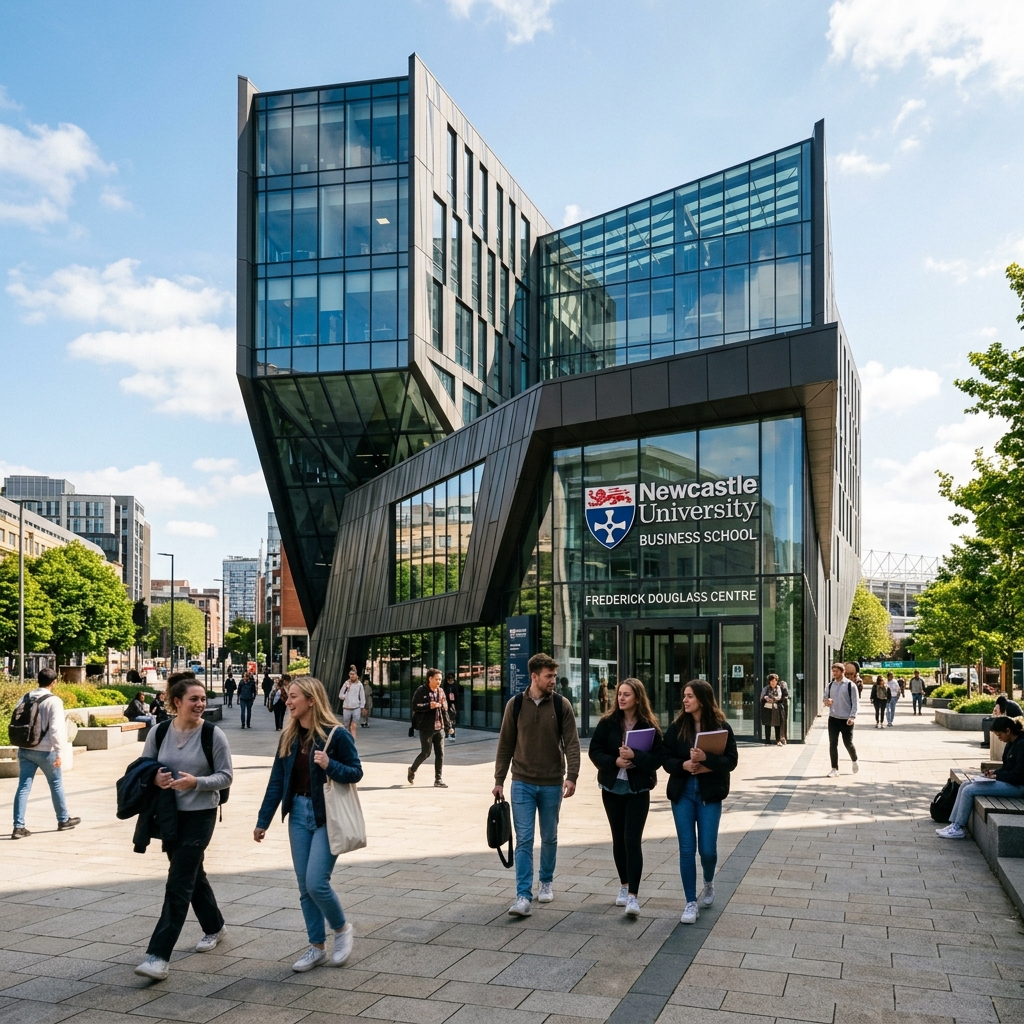
Finance is the study of how money and capital are managed, allocated, and valued over time, both within organisations and across the financial system as a whole. It draws on economics, mathematics, and accounting to build frameworks for understanding investment decisions, risk, corporate capital structure, financial markets, and the instruments that allow risk to be priced and transferred. In an era of increasing complexity and globalisation in financial markets, the ability to think analytically about these questions is genuinely valuable. At Newcastle University, this three-year full-time programme offers an unusually rich set of experiential features: it includes a sandwich year, a year abroad, and work placement opportunities, giving you the chance to combine extended professional experience with international study before completing your final year. You will study corporate finance, investment management, financial markets, derivatives, quantitative methods, and portfolio theory, developing the technical fluency and analytical judgement that employers in the sector value. The sandwich year allows you to spend a full year working in a financial role, while the year abroad broadens your perspective on how financial systems and regulatory environments differ across countries. A typical entry tariff of 136 points reflects the programme's competitive nature. Finance graduates move into a wide range of careers in investment banking, asset management, corporate treasury, financial consulting, risk management, and financial regulation. The combination of a placement year and a year abroad is a distinctive advantage, and many students secure graduate positions with the organisations where they completed their placements. Professional qualifications such as the CFA or ACA are common next steps for graduates who want to specialise further. Others pursue master's degrees in finance, financial economics, or quantitative finance. The programme is well suited to those with strong analytical interests and ambitions for a career at the intersection of mathematics, economics, and global markets.
Syllabus & Modules
Typical curriculumStudent Satisfaction
National Student Survey - 20 respondents (70% response rate)
Similarly Ranked Alternatives



What comes next? 🎓
Choosing the right university starts with choosing the right school. Explore transparent, data-driven school profiles powered by official DfE statistics.
Explore Schools on WhatSchool.ai →