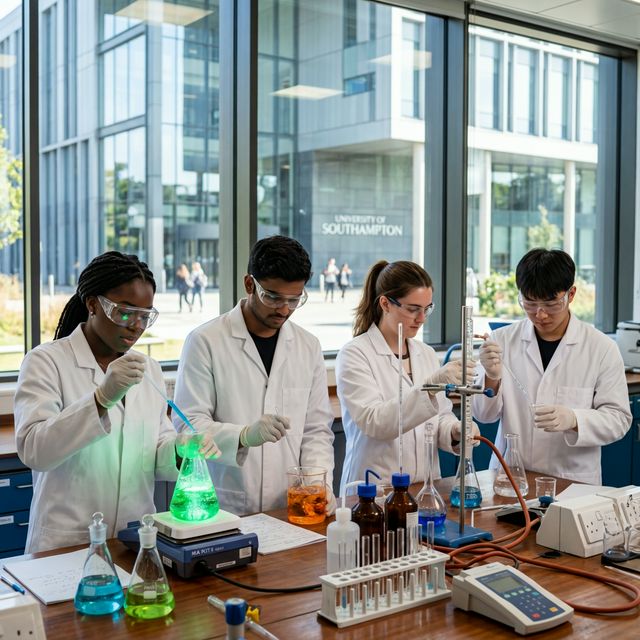
BSc Environmental Science: Sustainability
About this course
Environmental science with a focus on sustainability addresses one of the defining challenges of our time: how human societies can meet their needs without depleting the ecological systems and natural resources that all life depends on. The discipline combines physical and biological sciences with economics, geography, policy analysis and systems thinking to understand environmental problems at the scale at which they actually operate, from local ecosystems to global climate systems. Sustainability adds a forward-looking dimension, asking what practical solutions exist and what changes are needed in how we produce energy, use land, manage water and organise our economies. At the University of Southampton, this three-year full-time programme combines theory with practical work and project-based learning, developing your ability to explore sustainable solutions to the environmental problems faced by society today and in the future. You will study Earth systems science, ecology, environmental chemistry, climate science, resource management, environmental policy and sustainability frameworks, building both the scientific knowledge and the policy and systems thinking that addressing environmental challenges requires. Southampton's location on the south coast, close to marine environments and productive agricultural land, and its research strengths in ocean science, environmental change and sustainability provide a rich context for your studies. Graduates of environmental science and sustainability programmes go on to careers in environmental consultancy, government agencies dealing with planning, climate and environmental regulation, conservation organisations, sustainability roles in businesses, international development, research, science policy and education. The combination of scientific credibility and policy-relevant thinking is particularly valued in organisations that need both technical understanding and the ability to communicate it effectively to non-specialist audiences. Further study at master's or doctoral level in environmental science, sustainability, climate change or ecology is a common route for those drawn to research or specialist professional careers.
Syllabus & Modules
Typical curriculumStudent Satisfaction
National Student Survey - 30 respondents (73% response rate)
Similarly Ranked Alternatives
What comes next? 🎓
Choosing the right university starts with choosing the right school. Explore transparent, data-driven school profiles powered by official DfE statistics.
Explore Schools on WhatSchool.ai →