BA English and Creative Writing
About this course
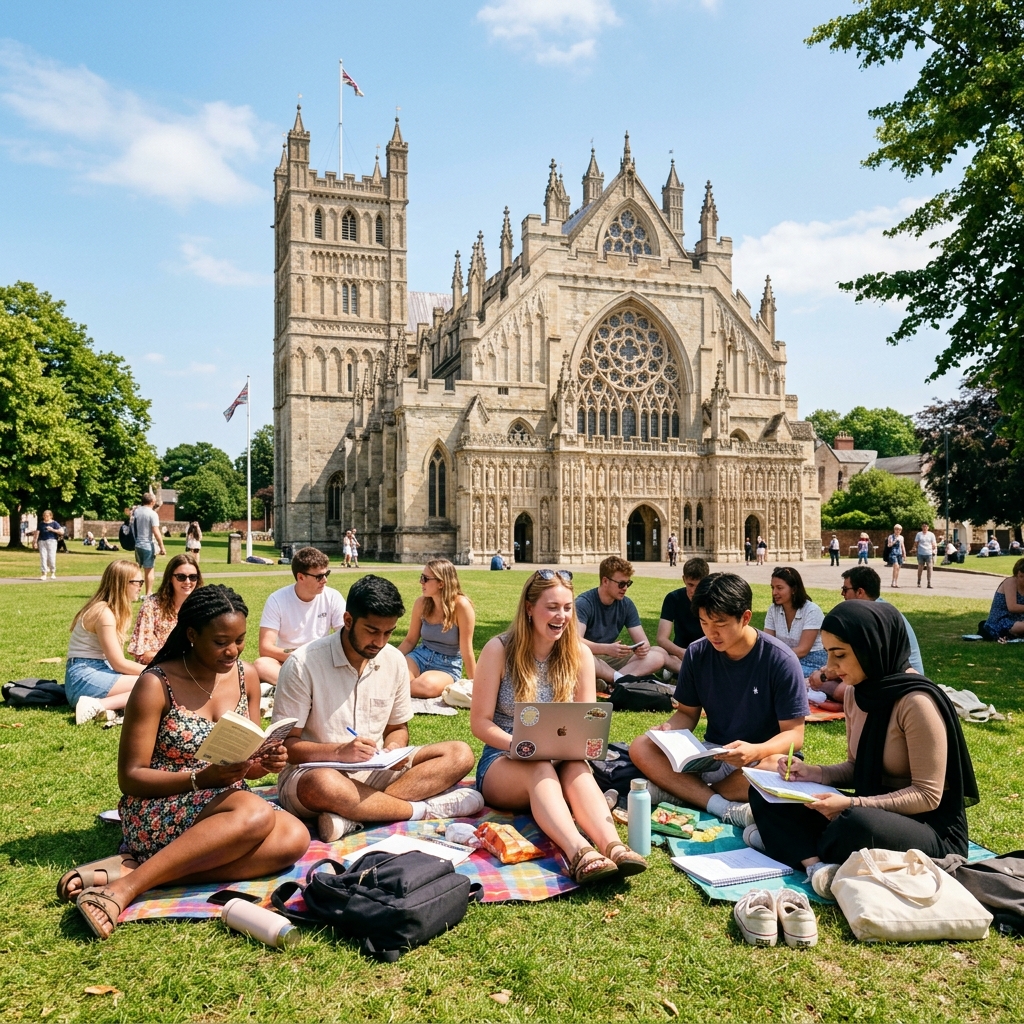
English and creative writing is a degree that develops two complementary modes of engagement with language and literature. English as a critical discipline trains you to read closely, to analyse how texts produce meaning, to understand the historical and cultural contexts in which they were written and received, and to construct rigorous arguments about what literature does and why it matters. Creative writing asks you to develop your own practice as a writer, to make deliberate choices about form, voice, structure and style, and to bring the same attentiveness to language that you apply as a critic to your own work. Together they make a degree that is both intellectually serious and practically ambitious. At the University of Exeter this three-year full-time programme is delivered in a city and university with a strong reputation in both literary studies and creative practice. The programme includes a sandwich year, a year abroad and embedded work placement opportunities, which is an unusually rich set of structural features for a humanities degree and reflects Exeter's commitment to connecting academic study with professional and international experience. You will read widely across periods, genres and literary traditions, developing your critical vocabulary and analytical skills, and you will write in a range of forms, receiving workshop feedback on your work and developing the discipline and craft that serious writing requires. The combination develops analytical precision and creative risk-taking alongside each other, and the skills they generate, close reading, strong writing, argument, creative problem-solving, cultural awareness, transfer into a remarkable range of professional contexts. Graduates move into publishing, journalism, broadcasting, the civil service, education, marketing, communications, theatre and the creative industries. Teaching is a common destination, typically via a PGCE. Many go on to postgraduate study in creative writing, publishing, English literature or related fields, and some develop careers as writers, with the degree providing both the craft foundation and the professional network to make that possible.
Syllabus & Modules
Typical curriculumStudent Satisfaction
National Student Survey - 15 respondents (74% response rate)
Similarly Ranked Alternatives


What comes next? 🎓
Choosing the right university starts with choosing the right school. Explore transparent, data-driven school profiles powered by official DfE statistics.
Explore Schools on WhatSchool.ai →