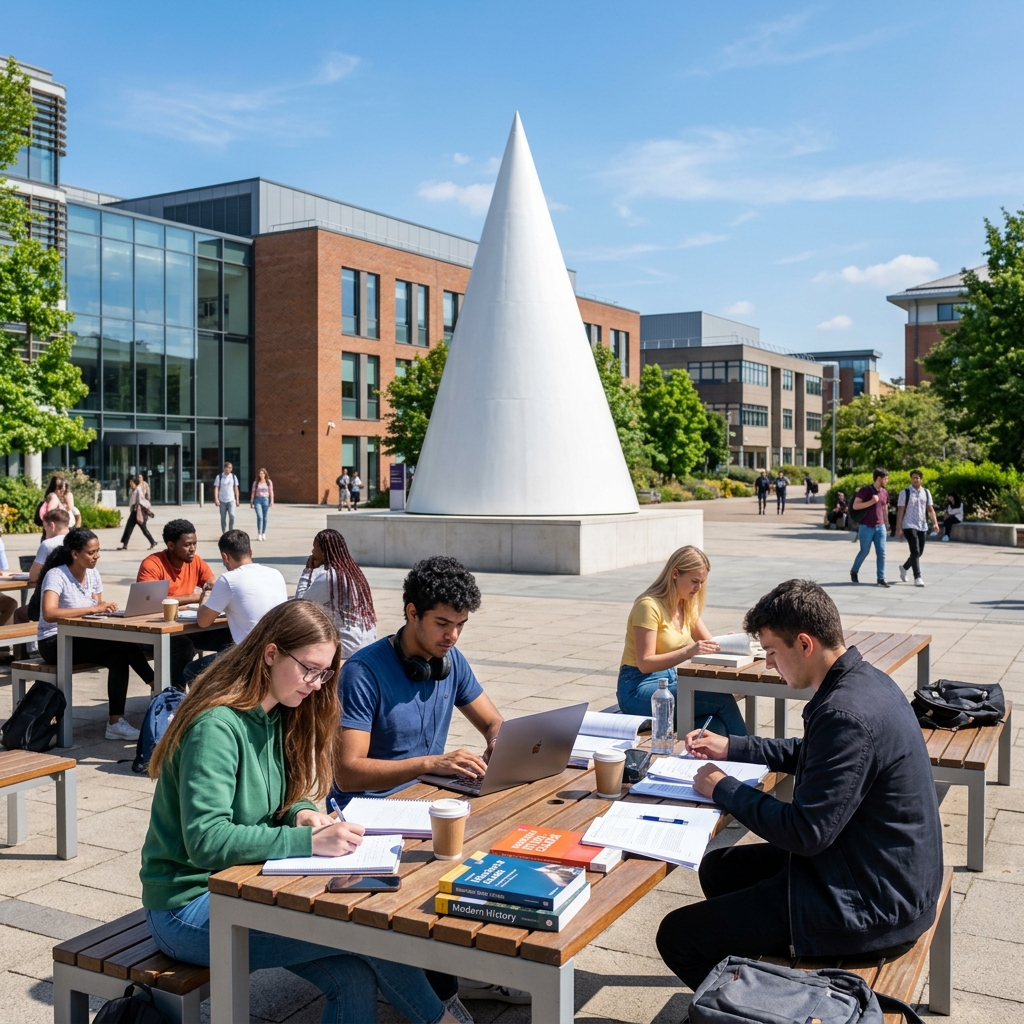
BA Education
About this course
Education as an academic discipline is not simply preparation for teaching: it is a serious intellectual field that draws on sociology, psychology, philosophy, history, and politics to ask why and how human beings learn, what the purposes of education are, and how social structures shape who gets to learn what. These are questions that matter deeply, because education is one of the primary ways in which societies reproduce and challenge themselves, and the decisions made about schooling, early childhood, higher education, and lifelong learning have profound consequences for individuals and communities alike. At the University of Warwick, this three-year, full-time degree explores education through multiple disciplinary lenses, examining how institutions and systems work, how childhood and development are understood, how inequality and diversity shape educational experience, and how creativity and power interact within learning environments. You will engage with theoretical ideas and empirical evidence, developing the analytical skills to critique systems and policies as well as to understand the lived realities of education in different social and cultural contexts. The programme includes a year abroad, broadening your intellectual horizons by exposing you to different educational traditions and systems. A typical entry tariff of 136 points reflects Warwick's academic expectations. An education degree from Warwick opens a wide range of doors. Many graduates go on to careers in teaching, school leadership, educational research and policy, educational charities and social enterprise, youth work, counselling, and international development. Others use the analytical training the degree provides to move into careers in journalism, the civil service, law, and management. Further study is common: master's and doctoral programmes in education, psychology, sociology, and public policy attract many graduates who wish to develop their expertise in a particular area. The degree is particularly well suited to those who believe that education is a means of social change and want a rigorous foundation for working within or influencing that field.
Syllabus & Modules
Typical curriculumStudent Satisfaction
National Student Survey - 25 respondents (86% response rate)
Similarly Ranked Alternatives

What comes next? 🎓
Choosing the right university starts with choosing the right school. Explore transparent, data-driven school profiles powered by official DfE statistics.
Explore Schools on WhatSchool.ai →