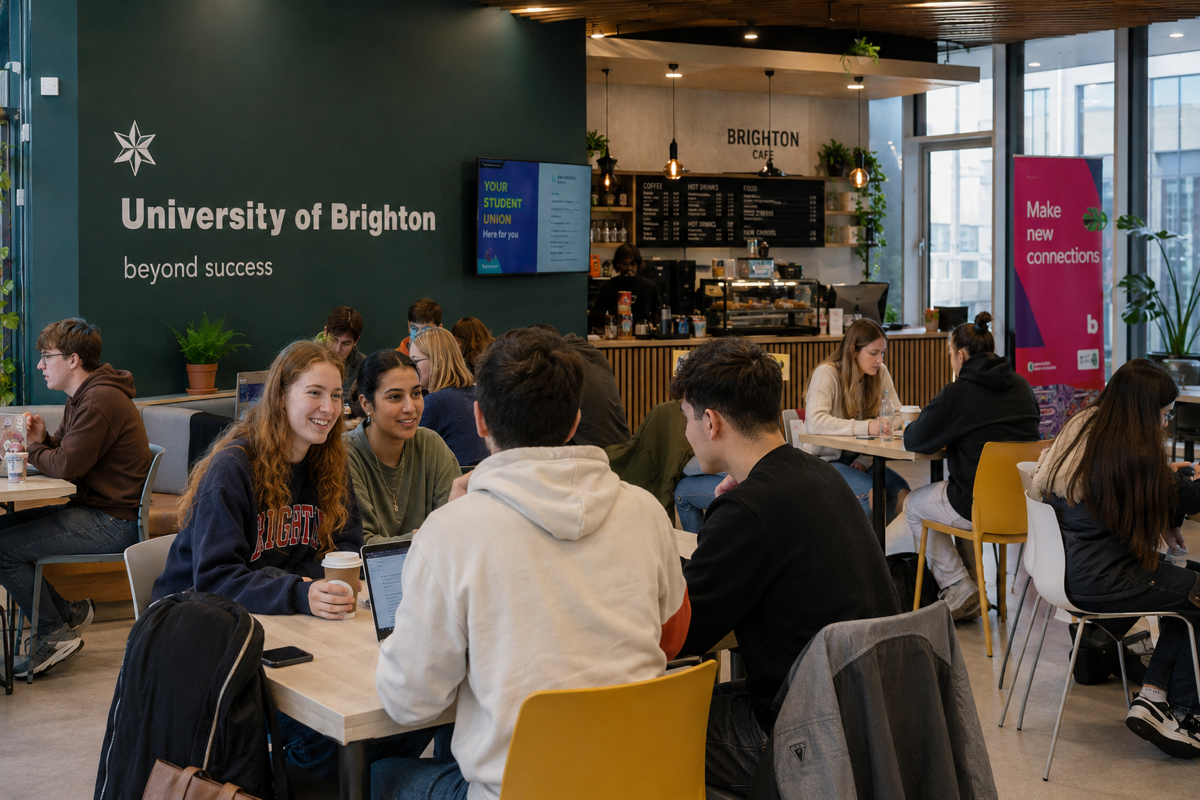
BSc Economics
About this course
Economics is the study of how individuals, firms, and governments make decisions about the allocation of resources in a world where those resources are scarce. It uses mathematical and statistical tools to build models of behaviour, test them against data, and draw conclusions about how markets work, why they sometimes fail, and what policies might improve outcomes. Economics ranges from the microscopic, analysing the decisions of individual consumers and firms, to the macroscopic, examining unemployment, inflation, growth, and the international economy. At Brighton this three-year full-time programme begins with a foundation year, making it accessible to students who have the intellectual potential to succeed in economics but who need additional academic preparation before the main degree begins. Once through the foundation year, you will study microeconomics, macroeconomics, econometrics, and a range of applied topics that might include development economics, labour economics, environmental economics, and public finance. A sandwich year is built into the programme, giving you the opportunity to work in an economics-related professional environment before your final year, and work placement activity supports your professional development throughout. This combination of foundation entry, academic rigour, and professional experience is designed to produce graduates who are both technically capable and practically ready for employment. Economics graduates are among the most highly regarded in the UK job market. The combination of analytical thinking, quantitative ability, and economic reasoning transfers well into finance, banking, consulting, the civil service, public policy research, business analysis, and many other fields. The sandwich year experience is often decisive in securing graduate employment. Postgraduate study in economics, finance, or a specialist area such as health economics, development economics, or econometrics is a well-trodden route for those who want to develop further expertise or pursue academic careers.
Syllabus & Modules
Typical curriculumStudent Satisfaction
National Student Survey - 20 respondents (71% response rate)
Similarly Ranked Alternatives
What comes next? 🎓
Choosing the right university starts with choosing the right school. Explore transparent, data-driven school profiles powered by official DfE statistics.
Explore Schools on WhatSchool.ai →