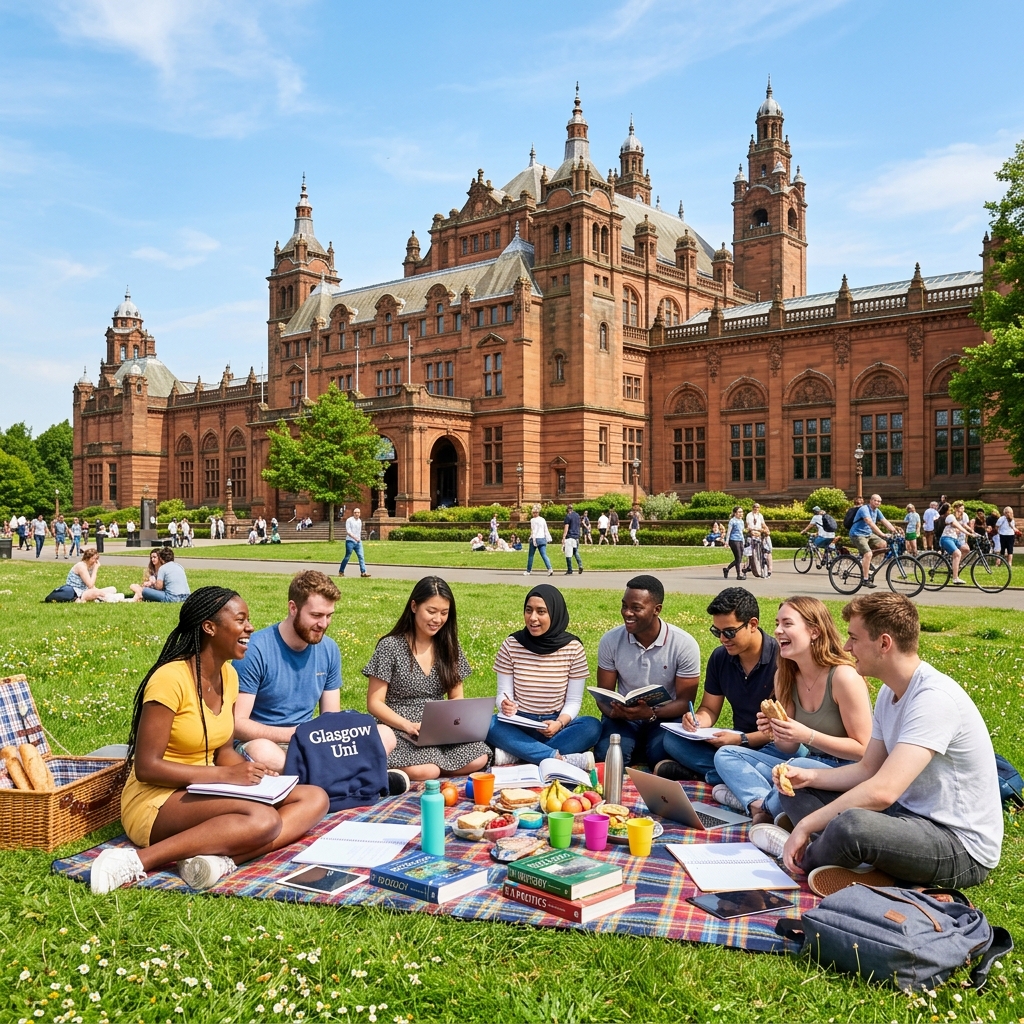
MA(SocSci) Economic & Social History/Economics
About this course
Economic and social history with economics is a combination that brings together two ways of understanding how human societies have organised economic life over time: the historical approach, which examines social and economic structures through the evidence of the past, and the analytical approach of economics, which provides formal tools for modelling economic behaviour and evaluating outcomes. Economic and social history uniquely combines history and the social sciences, focusing on social and economic structures, activities, and experiences over time, asking how people in the past lived and worked and how those patterns have shaped the development of the world today. At Glasgow you will study this four-year full-time degree, with a year abroad giving you the opportunity to study economic and social history and economics in a different international context. Glasgow has a distinguished tradition in economic history stretching back to Adam Smith himself, and the programme connects you to a research community with deep expertise in the field. You will develop strong historical research skills, including the ability to work with primary sources such as census records, business archives, and quantitative historical datasets, alongside the economic theory and quantitative methods that allow you to analyse those sources with analytical precision. The combination produces graduates who can bring both depth of historical understanding and economic analytical capability to the questions they study. Graduates of economic and social history with economics enter careers in financial services, economic consultancy, policy research, the civil service, journalism, and the heritage sector, as well as in academic research in economic history, which remains a vibrant and important field. The combination of historical and economic training is particularly valued in roles that require understanding long-run patterns of change, institutional evolution, and the relationship between economic outcomes and social structures. Many graduates continue to postgraduate study in economic history, economics, or a related social science, and Glasgow's strong research environment makes it an excellent springboard for doctoral work.
Syllabus & Modules
Typical curriculumStudent Satisfaction
National Student Survey - 130 respondents (60% response rate)
What comes next? 🎓
Choosing the right university starts with choosing the right school. Explore transparent, data-driven school profiles powered by official DfE statistics.
Explore Schools on WhatSchool.ai →