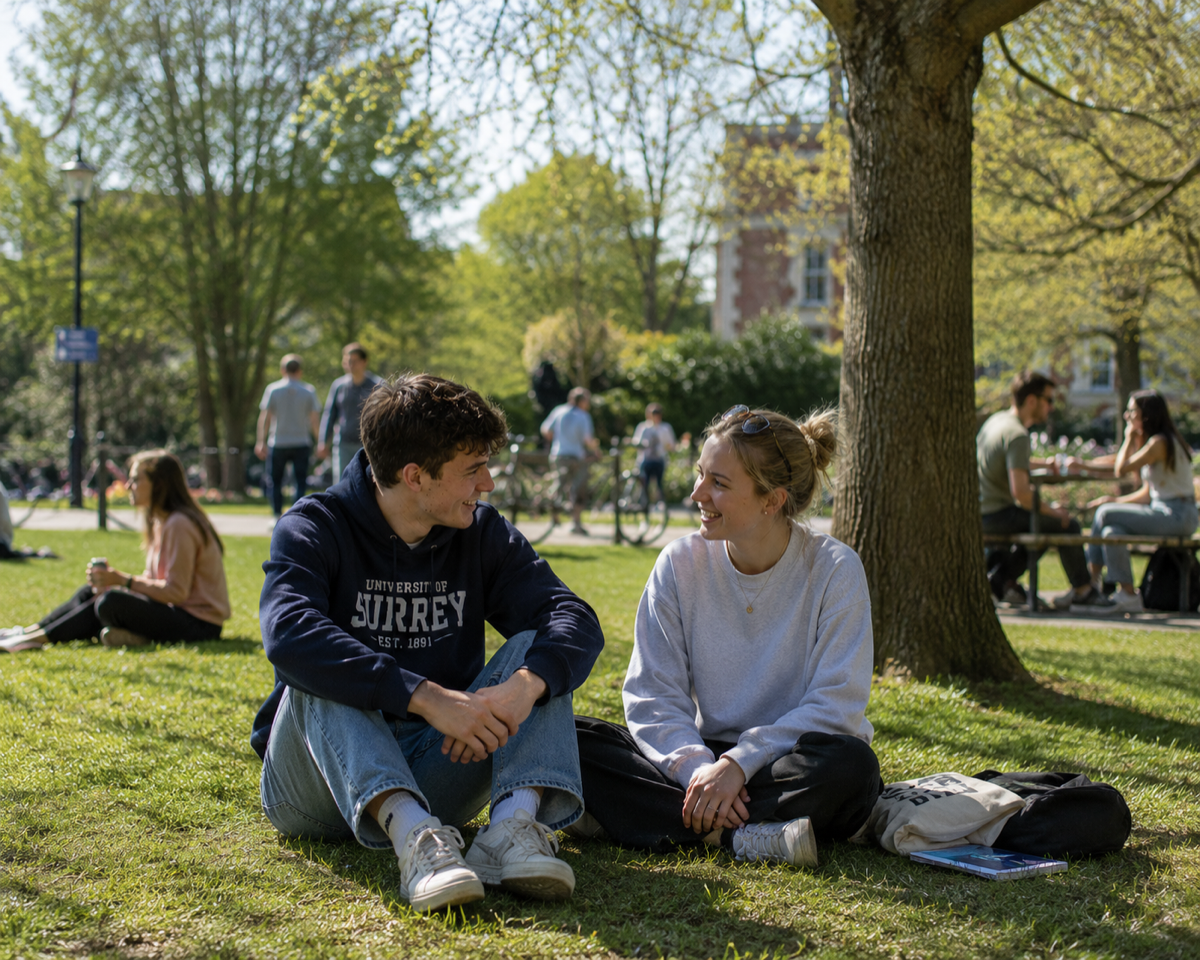
BSc Criminology and Sociology
About this course
Criminology and sociology are natural intellectual partners. Criminology investigates the causes, patterns, and consequences of crime, and asks how societies respond through law, policing, courts, and prisons. Sociology provides the broader theoretical framework, the analysis of social structure, inequality, culture, and power that makes it possible to understand why crime is distributed unevenly and why responses to it reflect particular interests and assumptions. Together they offer a rigorous and critical lens on some of the most pressing questions in contemporary public life. At the University of Surrey, this three-year full-time programme develops your ability to think analytically about crime, deviance, and social order while engaging with the major theoretical traditions in sociology. You will study criminological frameworks such as labelling theory, strain theory, and desistance alongside sociological accounts of inequality, race, gender, class, and the institutions that shape everyday life. Research methods are central to both disciplines, and you will develop skills in both quantitative and qualitative approaches, learning to evaluate evidence and construct arguments that are careful and well-grounded. The university is actively integrating AI literacy into its programmes, supporting you to develop digital skills and confidence that employers value in a changing workplace, alongside the disciplinary knowledge that distinguishes criminology and sociology graduates. Graduates from criminology and sociology programmes enter careers in criminal justice, social work, probation, policy research, community development, journalism, the civil service, and the voluntary sector. The analytical and communication skills the degree develops are valued across a wide range of organisations. Many graduates also go on to further study, including postgraduate programmes in criminology, social policy, law, social research, or criminal justice administration, as well as professional qualifications in social work.
Syllabus & Modules
Typical curriculumStudent Satisfaction
National Student Survey - 10 respondents (80% response rate)
Similarly Ranked Alternatives

What comes next? 🎓
Choosing the right university starts with choosing the right school. Explore transparent, data-driven school profiles powered by official DfE statistics.
Explore Schools on WhatSchool.ai →