BSc Chemistry
About this course
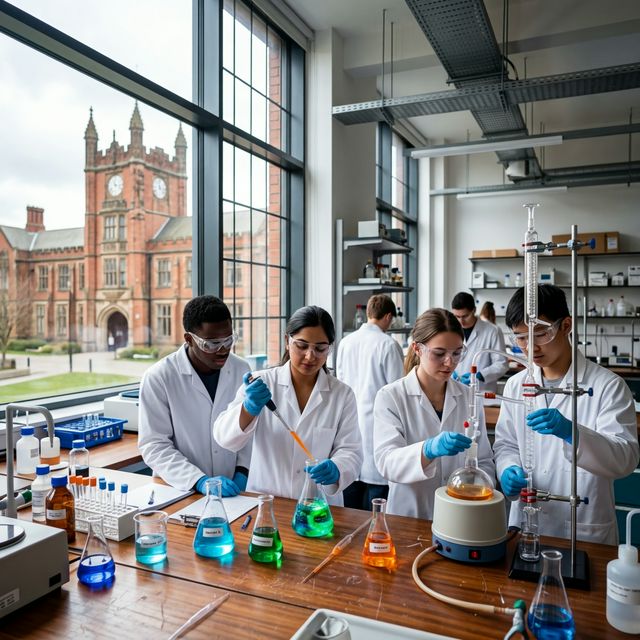
Chemistry is the science of matter and its transformations, the discipline that asks what substances are made of, how they behave, and how they can be combined, altered, and synthesised to create new materials with new properties. It underpins an extraordinary range of human activity, from the development of medicines and materials to the understanding of environmental processes, the production of energy, and the formulation of the food and products we use every day. Studying chemistry at degree level means developing the theoretical knowledge to understand why substances behave as they do and the practical skills to investigate them in the laboratory. At Newcastle University, this three-year full-time programme gives you a thorough grounding in the core branches of chemistry, including organic, inorganic, and physical chemistry, as well as analytical techniques and computational approaches. You will spend significant time in laboratory settings, developing experimental skills that are essential both for research and for professional roles in the chemical and pharmaceutical industries. Newcastle has a strong research environment, and undergraduate students typically benefit from exposure to current research activity, particularly in the later years of the programme. You will develop the ability to design and carry out experiments, to analyse and interpret data, and to communicate your findings in writing and in presentation. Chemistry is a discipline that rewards careful, methodical thinking alongside creative problem-solving, and degree-level study develops both. Chemistry graduates are among the most employable of any science discipline, working in pharmaceuticals, agrochemicals, materials science, forensics, food science, energy, and environmental analysis. The analytical and quantitative skills the degree develops are also valued in finance, consulting, and data roles. Many graduates continue to postgraduate study, including doctoral research in chemistry or related disciplines, which is often the route into academic or industrial research careers.
Syllabus & Modules
Typical curriculumStudent Satisfaction
National Student Survey - 10 respondents (50% response rate)
Similarly Ranked Alternatives



What comes next? 🎓
Choosing the right university starts with choosing the right school. Explore transparent, data-driven school profiles powered by official DfE statistics.
Explore Schools on WhatSchool.ai →