BEng Chemical Engineering
About this course
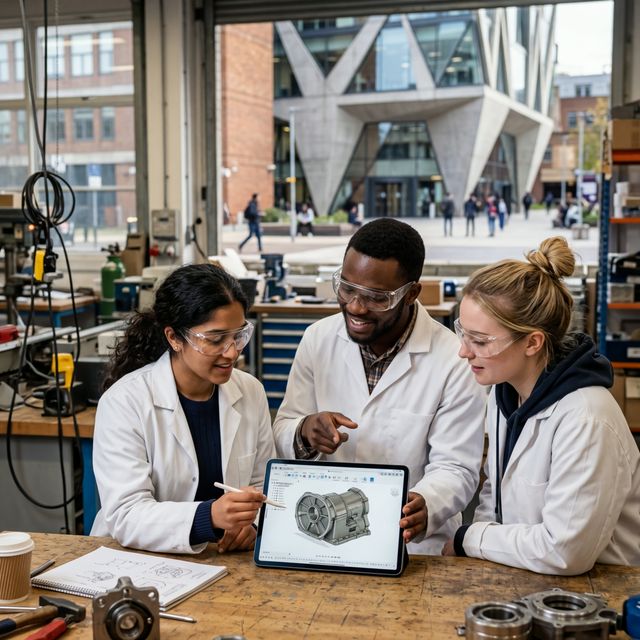
Chemical engineering is the discipline that translates chemistry from laboratory experiment to industrial reality. Where chemists discover how substances react and transform, chemical engineers design and optimise the processes by which those reactions are carried out at scale, efficiently, safely, and sustainably. The discipline sits at the heart of some of the most important challenges of the coming decades: developing cleaner energy sources, reducing industrial waste, creating new materials, and designing pharmaceutical manufacturing processes that can supply medicines to global populations. At Queen Mary University of London, the MEng or BEng Chemical Engineering programme runs over four years of full-time study and engages directly with these challenges. The degree develops a strong foundation in the physical and chemical sciences, alongside the mathematical and engineering skills needed to analyse and design complex processes. You will study thermodynamics, fluid dynamics, heat and mass transfer, reaction engineering, and process control, learning to apply these principles to the design of real systems. Sustainability and the future of the world's resources are themes that run through the programme, reflecting the central role chemical engineering plays in areas such as carbon capture, renewable fuels, waste reduction, and the circular economy. Laboratory and design work develop your practical and problem-solving abilities alongside your theoretical understanding, and you will engage with the professional and ethical responsibilities that come with engineering practice. Chemical engineering graduates are consistently among the most employable of any engineering discipline. The process industries, including petrochemicals, pharmaceuticals, food and drink manufacturing, specialty chemicals, and water treatment, all recruit heavily from this field. Energy companies, environmental consultancies, and materials science firms also employ chemical engineers in significant numbers. Careers in process design, project engineering, operations management, technical consulting, and research and development are all accessible to graduates. Many go on to postgraduate study or doctoral research, particularly in areas such as sustainable process design, biotechnology, or materials. The degree also provides a strong quantitative foundation that is valued in finance, data analysis, and management consulting.
Syllabus & Modules
Typical curriculumStudent Satisfaction
National Student Survey - 25 respondents (66% response rate)
Similarly Ranked Alternatives

What comes next? 🎓
Choosing the right university starts with choosing the right school. Explore transparent, data-driven school profiles powered by official DfE statistics.
Explore Schools on WhatSchool.ai →