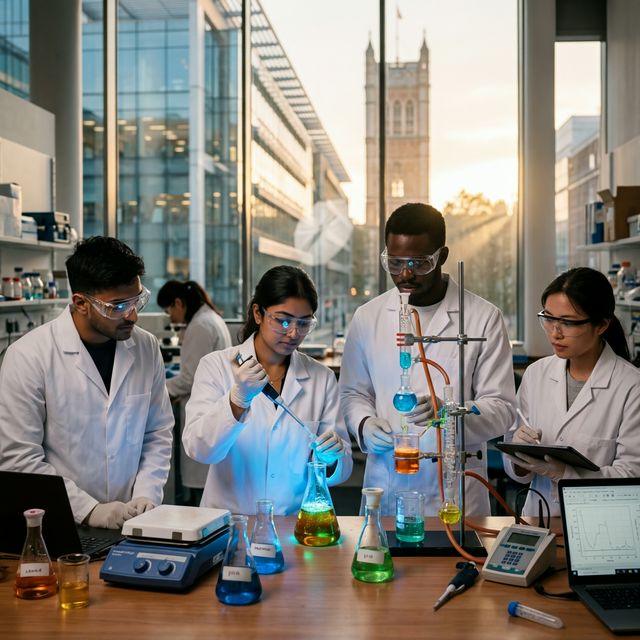
BSc Biotechnology with German for Science
About this course
Biotechnology is the application of biological systems and organisms to develop products and processes that benefit medicine, agriculture, food production and industry. It is one of the most rapidly advancing fields in the life sciences, driving innovations in gene therapy, vaccine development, synthetic biology, biofuels and precision medicine. Combining biotechnology with German for science adds a distinctive professional dimension: Germany is one of the world's leading centres of scientific research and the pharmaceutical and chemical industries, and the ability to present scientific and technical material in German is a significant professional asset in this context. At Imperial College London, this four-year full-time programme develops your biochemistry, molecular biology and biotechnology expertise alongside scientific German, training you to communicate in both fields with professional competence. You will study the principles of molecular biology, genetic engineering, protein expression, cell culture, fermentation technology, bioprocessing and the translation of biological discovery into commercial and medical application. The German for science strand develops your language skills specifically in the technical and scientific registers used in research publications, laboratory settings and industry. The combination of cutting-edge biotechnology training at one of the world's leading science and engineering institutions with German language proficiency is genuinely distinctive. Imperial's strong connections with the pharmaceutical and biotech industry provide excellent pathways into research and commercial roles. Graduates go on to careers in pharmaceutical companies, biotech firms, research institutions, regulatory agencies and academic science, particularly those with operations in or connections to German-speaking countries. Some go on to postgraduate study or doctoral research in biotechnology, molecular biology, biochemistry or related fields. The ability to work scientifically in German is valued across the European life sciences industry.
Syllabus & Modules
Typical curriculumStudent Satisfaction
National Student Survey - 135 respondents (71% response rate)
Similarly Ranked Alternatives

What comes next? 🎓
Choosing the right university starts with choosing the right school. Explore transparent, data-driven school profiles powered by official DfE statistics.
Explore Schools on WhatSchool.ai →