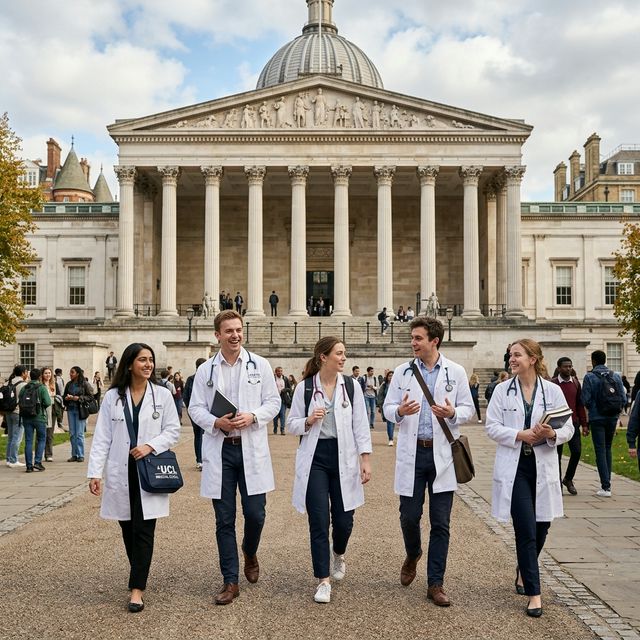
BSc Applied Medical Sciences
About this course
Applied medical sciences sits between the pure biomedical sciences and clinical practice, focusing on how scientific knowledge is translated into the diagnosis, monitoring, and treatment of disease. It is a discipline grounded in the laboratory sciences, including biochemistry, haematology, immunology, microbiology, and cellular pathology, but always with an eye on clinical application and patient care. Understanding what happens at the molecular and cellular level when the body is under stress from infection, injury, or chronic disease is the foundation on which modern clinical diagnostics is built, and applied medical sciences programmes train the people who make that infrastructure work. At University College London, one of the world's leading research universities, this three-year full-time programme gives you access to exceptional academic expertise and a research culture that reaches from the laboratory bench to clinical translation. You will develop a strong grounding in the core biomedical disciplines, learn to work with the analytical and laboratory techniques that underpin clinical science, and develop the ability to interpret data critically in a clinical context. UCL's location in London also means proximity to major NHS teaching hospitals and research institutes, which shapes the character of the degree throughout. You will study how the body maintains health and how disease disrupts those mechanisms, building scientific literacy that allows you to read and evaluate clinical and scientific evidence rigorously. The programme develops both practical laboratory skills and the analytical and communication abilities that are essential in professional scientific and healthcare environments. Graduates of applied medical sciences programmes are well placed for careers in NHS clinical laboratories as healthcare scientists, in the pharmaceutical and biotechnology industries, in public health agencies, and in academic research. The professional registration pathway with the Health and Care Professions Council is a natural next step for those moving into NHS clinical science roles. Many graduates also progress to postgraduate study in specialist clinical science, medicine, or research degrees.
Syllabus & Modules
Typical curriculumStudent Satisfaction
National Student Survey - 70 respondents (77% response rate)
Similarly Ranked Alternatives



What comes next? 🎓
Choosing the right university starts with choosing the right school. Explore transparent, data-driven school profiles powered by official DfE statistics.
Explore Schools on WhatSchool.ai →