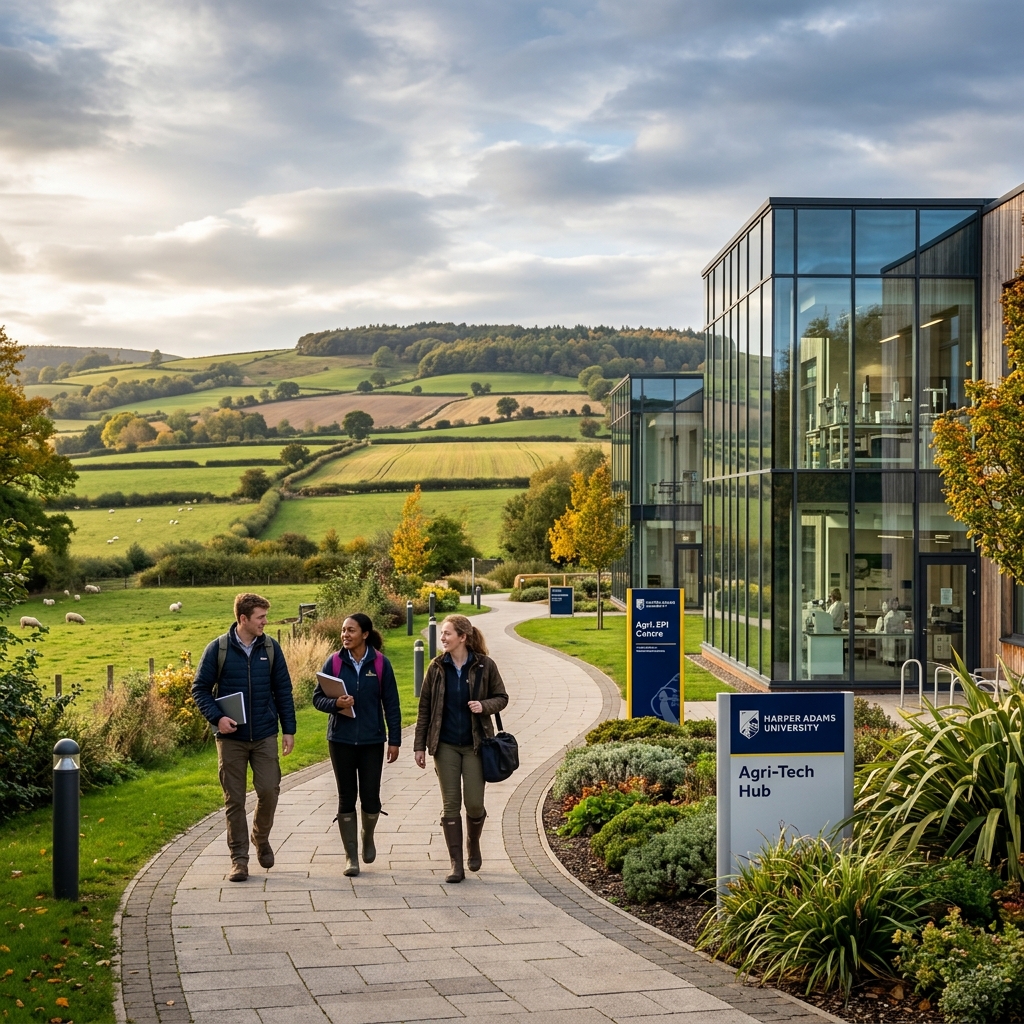
BEng Agricultural Engineering
About this course
Agricultural engineering addresses some of the most significant challenges of our time, applying engineering science and innovation to the problems of feeding a growing global population with increasingly scarce resources while protecting the environment, as Harper Adams University itself describes. Agricultural engineers design, develop, and improve the machines, systems, and technologies that underpin food production, from precision farming equipment and irrigation systems to grain storage and food processing infrastructure. The discipline combines mechanical and electronic engineering with an understanding of biology, agronomy, and rural business. Harper Adams University's four-year full-time Agricultural Engineering degree has a typical entry tariff of 120 points and is delivered by the UK's leading specialist institution in land-based education. Harper Adams has deep industry connections and a practical orientation, meaning your studies are grounded in the realities of the agricultural sector. You will study engineering principles including mechanics, hydraulics, electrical systems, and materials science alongside agricultural science, precision farming technologies, machinery systems, and the business and environmental context of farming. The combination of engineering rigour and agricultural relevance prepares you for the specific technical challenges of the sector, which is undergoing rapid change as sensors, robotics, and data systems transform how farms operate. Agricultural engineering graduates work in farm machinery design and manufacturing, agricultural contracting, precision agriculture consultancy, farm management, irrigation engineering, and food processing. Many enter roles with major agricultural equipment companies or work for manufacturers developing the next generation of autonomous and sensor-guided farm machinery. Others move into international development roles, applying engineering solutions to food security challenges in lower-income countries. Postgraduate study in agricultural engineering, precision agriculture, or sustainable food systems is an option for those wanting to specialise or move into research.
Syllabus & Modules
Typical curriculumStudent Satisfaction
National Student Survey - 240 respondents (76% response rate)
Similarly Ranked Alternatives

What comes next? 🎓
Choosing the right university starts with choosing the right school. Explore transparent, data-driven school profiles powered by official DfE statistics.
Explore Schools on WhatSchool.ai →